The first sign that our backyard popcorn experiment was not going to behave like normal popcorn came when the pot started popping like it had been personally offended.
We make popcorn on the stove almost every day at our house. Pot, avocado oil, kernels, lid, shake it around, wait for the familiar slow build. It is not a complicated ritual, and it is probably tied to my lifelong love of movies.
This batch skipped the ritual.
The kernels started exploding almost at once. Not a polite pop here and there. More like the whole pot decided to get it over with. A few pieces puffed into little round popcorn balls instead of the usual fluffy shape, which was funny enough that I could almost forgive the mess.
Almost.
It started with the popcorn we already eat
This whole thing began with a bag of bulk popcorn from WinCo Foods. We buy the colorful kind with red and blue kernels, and at some point curiosity got the best of us.
What would happen if we just planted some of these?
That is how a lot of backyard garden decisions happen, at least at our house. Not with a clipboard or a five-year plan. Just somebody holding a handful of seeds and saying, “I wonder.”
So we planted several rows in the backyard and waited.
This was also one of the hottest Oklahoma summers we’ve had in the garden, and, to be honest, probably the most neglected our garden has been in years. Work got busy. Filming got busy. Life did what life does. The plants did not get the steady attention they deserved.
Somehow, the corn still grew.
Not every stalk turned into something impressive, but enough of the ears filled out with good-looking kernels that the whole experiment started to feel less ridiculous. We had tried something similar before without much luck, so seeing actual popcorn ears in the garden felt like a small win.
Harvesting, shelling, and the slow part
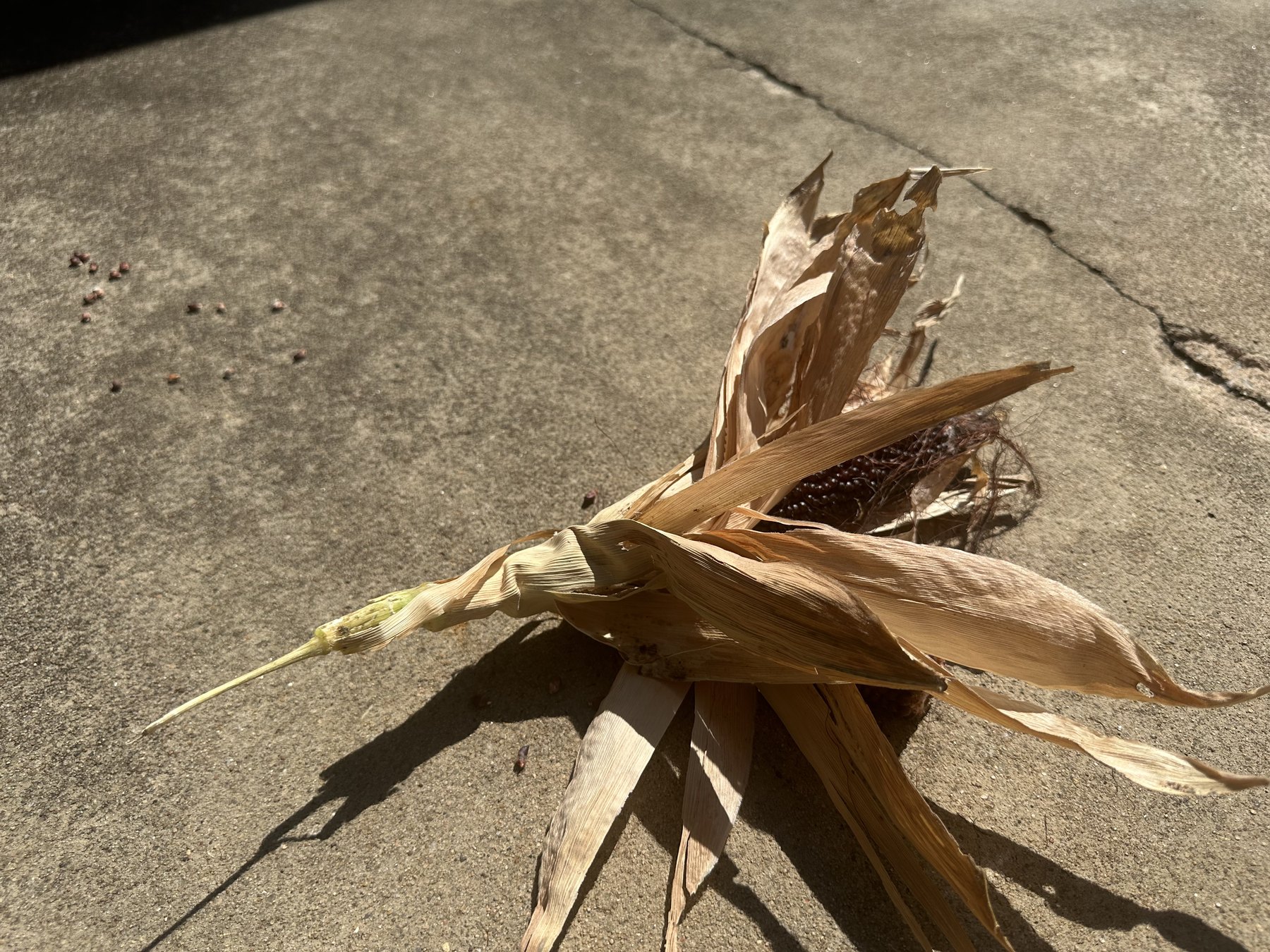
We were probably about a week later than we should have been harvesting, but eventually we pulled a few ears and peeled back the husks.
That was the first really satisfying part.
The kernels had that hard, glossy look popcorn should have. After months of heat, uneven care, and low expectations, there it was, food we had grown from something we normally pour into a pot before watching a movie.
We shelled the kernels by hand, which sounds charming until you are doing it long enough to remember why machines exist. Still, there is something good about that kind of slow work. One cob turns into a handful. A few ears turn into a small bowl. The pile grows, and suddenly the experiment feels real.
The empty cobs looked almost as interesting as the kernels, like proof that the plant had done its part and now it was our turn not to mess it up.
Naturally, we messed it up a little.
So, did backyard popcorn actually work?
Yes.
Also, not exactly.
Some of it popped. Some of it tasted like popcorn, just milder than what we usually buy. The texture was different too, not quite the same light crunch we’re used to from the bulk kernels.
A good chunk of it was not especially edible.
That does not mean the experiment failed. Popcorn is one of those crops where growing it is only part of the job. The kernels have to dry properly before they pop well. Too much moisture can make the popcorn chewy or odd. Too little can leave you with a pot full of stubborn unpopped kernels. The sweet spot is narrow, around 13 to 14 percent moisture, which is not something most backyard gardeners are measuring on a Tuesday evening.
We definitely did not measure it.
We harvested, shelled, and got impatient enough to cook it the way we always do. The likely answer is that our popcorn needed more curing time in a warm, dry, well-ventilated spot. It also may not have been the ideal variety for planting and popping at home. Grocery-store popcorn is sold as food, not seed, and that adds a little mystery to the whole project.

But here is the part I keep coming back to: we planted popcorn kernels from our kitchen, grew corn in an Oklahoma backyard during a brutal summer, harvested real ears, shelled them by hand, and made actual popcorn on the stove.


That counts.

Gardening has a way of stretching out a simple question over several months. You do not get to know the answer right away. You plant, water, forget to water, sweat through July, wait too long, harvest anyway, and then stand over a stove while tiny backyard kernels try to launch themselves across the kitchen.

Next year, we will do it better. We’ll harvest with a little more intention, dry the ears longer, and test small batches before committing a whole pot.
That is the deal with gardening. Not every experiment gives you a clean success the first time. But if you pay attention, it usually gives you enough of an answer to try again.
Links
- Iowa State University Extension: Growing and Harvesting Popcorn in the Home Garden
- University of Minnesota Extension: Growing popcorn in home gardens
- Utah State University Extension: How to Grow Popcorn in Your Garden
- Oklahoma State University Extension: Summer Care of the Home Vegetable Garden