What do country star Vince Gill, rockabilly queen Wanda Jackson, and an old Oklahoma City bowling alley have in common?
The answer is glowing again in Chandler, Oklahoma.
Route 66 Bowl sits at 920 E. 1st Street in Chandler, right on the Mother Road. Today it is a family entertainment stop with bowling, arcade games, laser tag, glow mini golf, food, and a collection of vintage signs and Route 66 memorabilia that makes the whole property feel like a small roadside museum before you even get to the lanes.
But the most interesting part of the place is the giant neon 66 Bowl sign out front. That sign did not start in Chandler. It came from one of Oklahoma City’s best remembered Route 66 landmarks.
The original 66 Bowl on Northwest 39th
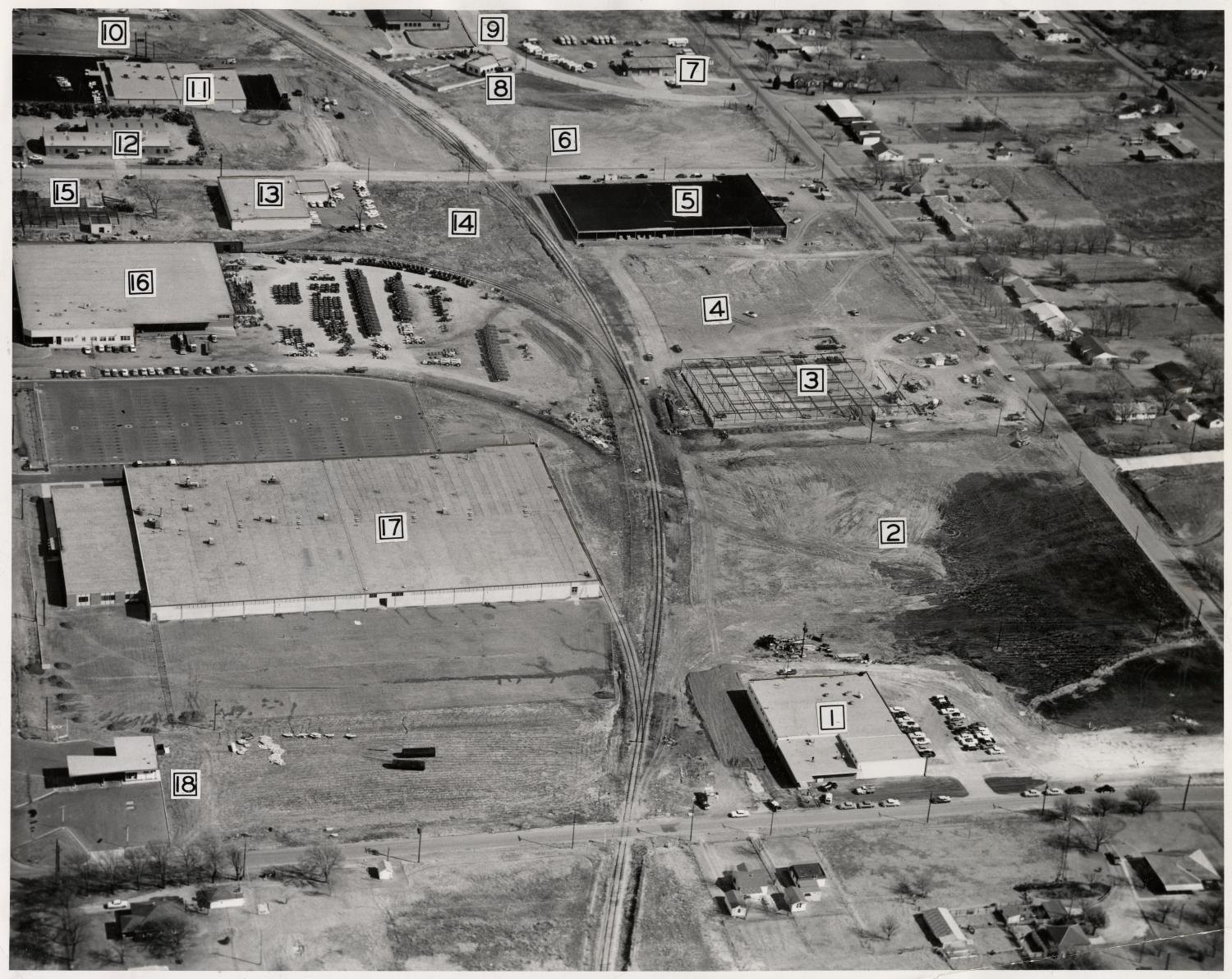
The first 66 Bowl opened in March 1959 at 3810 NW 39th Expressway in Oklahoma City, a stretch of road tied directly to old Route 66. It was a 24-lane bowling alley, and for more than half a century it served league bowlers, families, travelers, tournament players, and anyone who knew that big animated bowling sign from the road.
Historical newspaper photos from the Gateway to Oklahoma History show the alley’s long life from a few different angles. A 1959 aerial image places 66 Bowl in the growing Willow Springs industrial district. Other photos show Men’s Singles Classic action in 1970, Professional Bowlers Association tournament moments in 1965, senior league scorekeepers in 1983, and record-setting local bowling stories in the 1990s.

So this was not just a nostalgic sign with an empty story behind it. It was a real Oklahoma bowling landmark.

When the bowling alley became a music venue
By the 1990s, 66 Bowl had become something stranger and more memorable than a standard bowling alley. Stages were set across the lanes, and the place became known for live music: punk, rockabilly, roots rock, and local bands that made sense in a Route 66 room full of neon, bowling shoes, and Americana.

Oklahoma Gazette reported that the venue’s first show came in 1994, when Jim Haynes brought in The Poison Okies for a New Year’s Eve show. It worked well enough that the bowling alley kept booking music and became associated with Oklahoma’s rockabilly scene.
That music history gives the old 66 Bowl one of its best stories.
Wanda Jackson’s first date
Oklahoma’s own Wanda Jackson, the Queen of Rockabilly, had a personal connection to 66 Bowl. She and Wendell Goodman had their first date there in 1961, two years after the bowling alley opened. They married eight months later.
Nearly 50 years after that first date, Jackson came back to perform for 66 Bowl’s 50th anniversary celebration in 2009.
That is the kind of detail that turns a roadside business into something more layered. For most people, it was a bowling alley. For Wanda Jackson, it was the beginning of a marriage. For Oklahoma music fans, it became one of those unlikely rooms where Route 66 culture, bowling culture, and live music all crossed paths.
The closing of an Oklahoma City Route 66 landmark
The original 66 Bowl closed in 2010 after 51 years in business. The building had been sold, and the contents were auctioned.
The Journal Record described the neon sign as one of the most photographed signs on Route 66. Longtime owner Jim Haynes said people were always stopping to take pictures of it. Route 66 historian Michael Wallis called roadside signs part of the language of the highway, the bright visual vocabulary that pulled travelers toward motels, diners, bowling alleys, and gas stations.

When 66 Bowl closed, it would have been easy for the story to end there: another old Route 66 business gone, another neon sign taken down, another stretch of highway losing a piece of its character.

But people saved pieces of it.


Bowling lanes turned into guitars
One of the strangest afterlives of 66 Bowl came from the wood itself.


After the closing, wood from the original bowling lanes was saved and eventually turned into a limited run of custom electric guitars. Route 66 News reported that Bobby Clark of Dr. Mojo Guitars made solid-body guitars from the original pine lanes, with only 20 planned.
The first guitar went to Oklahoma country music legend Vince Gill. Vintage Guitar also covered the project, connecting it back to Bobby Clark, Cameron Eagle, the old 66 Bowl music scene, and the desire to keep the material from being lost.
That is such a perfect Route 66 twist: old bowling lanes becoming instruments.
The building closed, but the wood kept making sound.
The sign’s second life in Chandler
The biggest surviving piece, though, is the sign.
Route 66 News reported in 2016 that the original 66 Bowl sign had resurfaced in Chandler at a future sports and entertainment complex. The Chandler Chamber of Commerce confirmed that it was the genuine sign from Oklahoma City. The sign had been purchased, restored, and prepared for a new life farther east on Route 66.
Route 66 Road Map notes that the sign was repurposed from the former Oklahoma City bowling alley, refurbished, and installed outside the new Rt 66 Bowl in Chandler.
That is why the current Route 66 Bowl feels different from a normal entertainment center. The bowling, arcade, laser tag, miniature golf, food, and Route 66 décor are all fun on their own. But the sign gives the place a direct connection to a much older Oklahoma roadside story.
What you’ll find at Route 66 Bowl today
The current Route 66 Bowl in Chandler opened in 2021. It is now a modern family entertainment stop built around classic Americana. TravelOK lists bowling, arcade games, laser tag, mini golf, an on-site restaurant, play-and-win games, glow-in-the-dark mini golf, and a 101-foot bowling lane.
The official Route 66 Bowl website lists the address as 920 E. 1st St. in Chandler and describes the place as a mix of classic Americana and modern entertainment. The restaurant, Chevelle Cafe, serves pizza, burgers, wings, sandwiches, and other bowling-alley comfort food.
Outside, the old 66 Bowl sign is surrounded by vintage gas station signs, old advertising, and roadside memorabilia. Inside, the décor keeps that same energy going: bowling lanes, Route 66 signs, neon, arcade lights, and the feeling that someone decided a bowling alley could also be a love letter to the road.
Why it matters
The original 66 Bowl in Oklahoma City is gone. But the story did not vanish.
The sign survived. The wood from the lanes survived. The music stories survived. Wanda Jackson’s memory of that first date survived. The Vince Gill guitar story survived. And now, in Chandler, a new Route 66 Bowl gives that old sign a place to keep doing what it was built to do: stop people in their tracks.
That is the best version of Route 66 preservation. Not everything can stay exactly where it was. But sometimes the right pieces get saved, moved, reused, and made visible again.
So if you’re driving through Chandler, don’t just look for a bowling alley.
Look for the sign that refused to disappear.
# Route 66 Bowl Fact Block
- Place: Route 66 Bowl / Rt 66 Bowl
- Address: 920 E. 1st St., Chandler, OK 74834
- Phone: 405-258-2695
- Official website: https://www.rt66bowl.com/
- Official Instagram: https://www.instagram.com/route66bowl/ / @route66bowl
- Official Facebook: https://www.facebook.com/Route66Bowl
- Original 66 Bowl: 3810 NW 39th Expressway, Oklahoma City
- Original opening: March 1959
- Original closing: 2010 after 51 years
- New Chandler Route 66 Bowl opened: 2021
- Notable features today: bowling, arcade, laser tag, glow mini golf, Chevelle Cafe, Route 66 memorabilia, vintage gas station signs, 101-foot bowling lane
- Historical connections: Wanda Jackson first date with Wendell Goodman, live punk/rockabilly shows, custom guitars made from original bowling lanes, first guitar connected to Vince Gill