There are plenty of places along Route 66 where you can find neon signs, old gas pumps and reminders of the highway’s glory days. But in Chandler, Oklahoma, one of the most interesting Route 66 stops has a history that began with something entirely different.
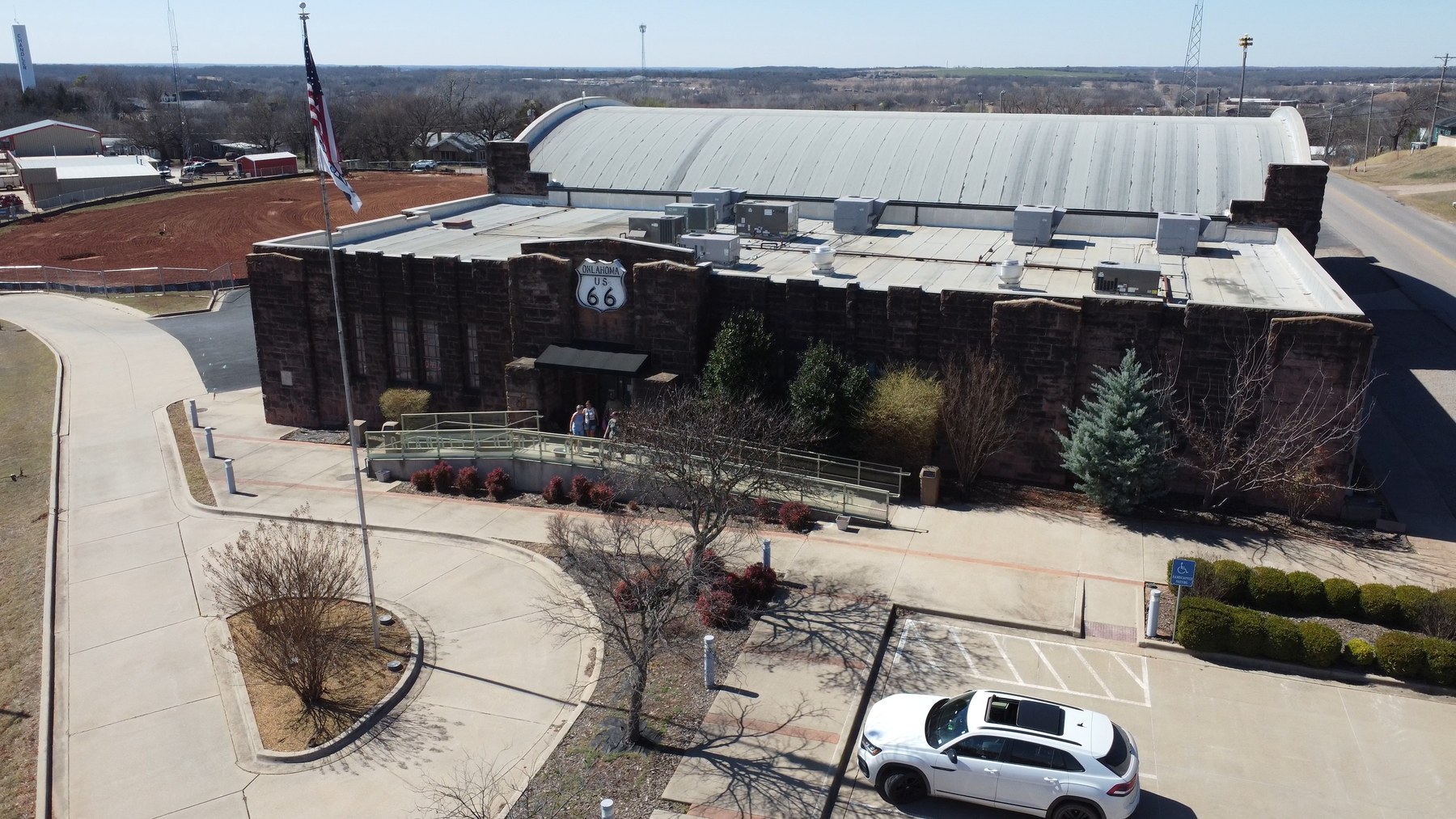
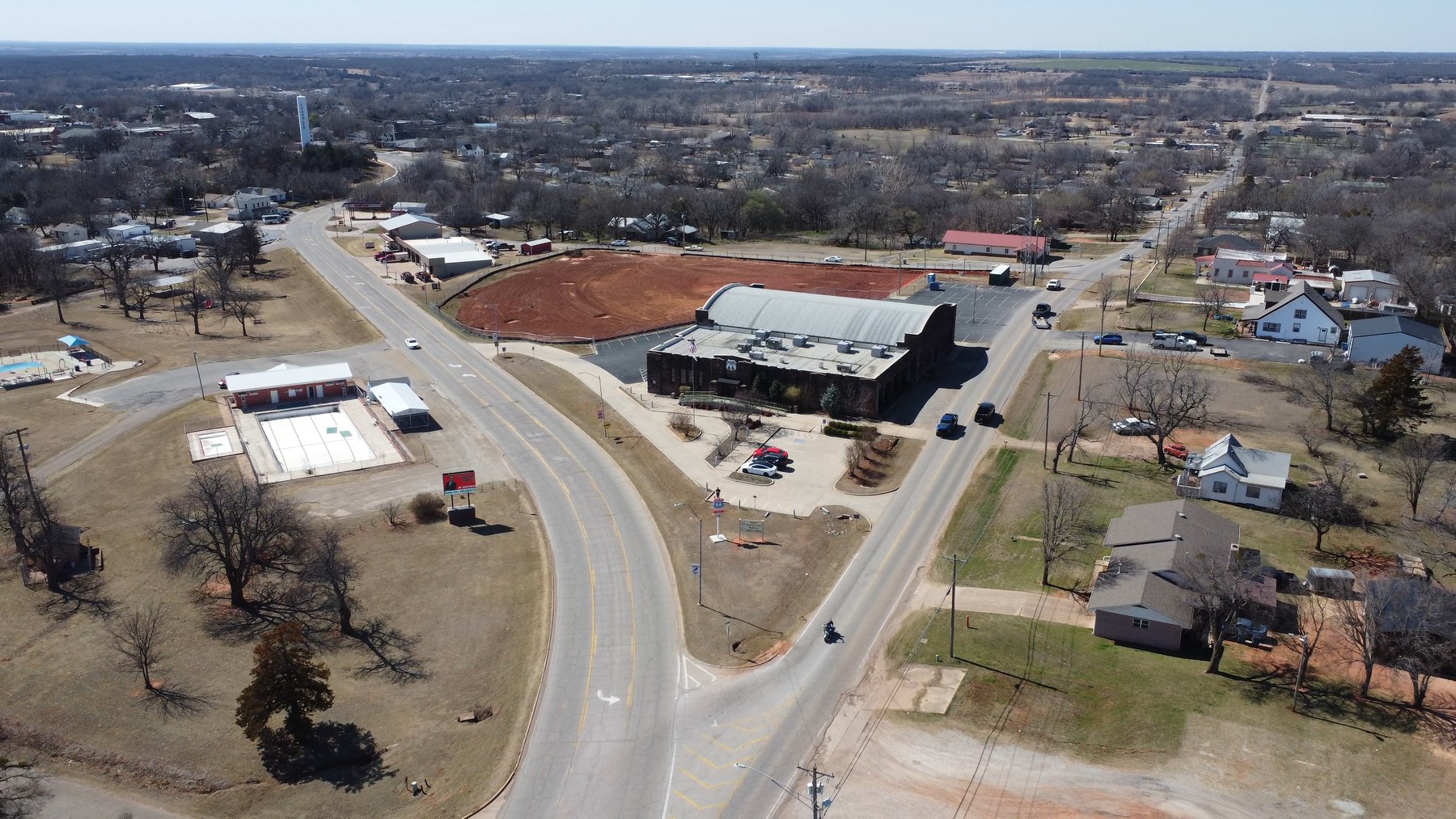
The Route 66 Interpretive Center is housed inside Chandler’s historic National Guard armory, a massive sandstone building that served Oklahoma soldiers for decades before falling into disrepair and eventually finding a completely new purpose.
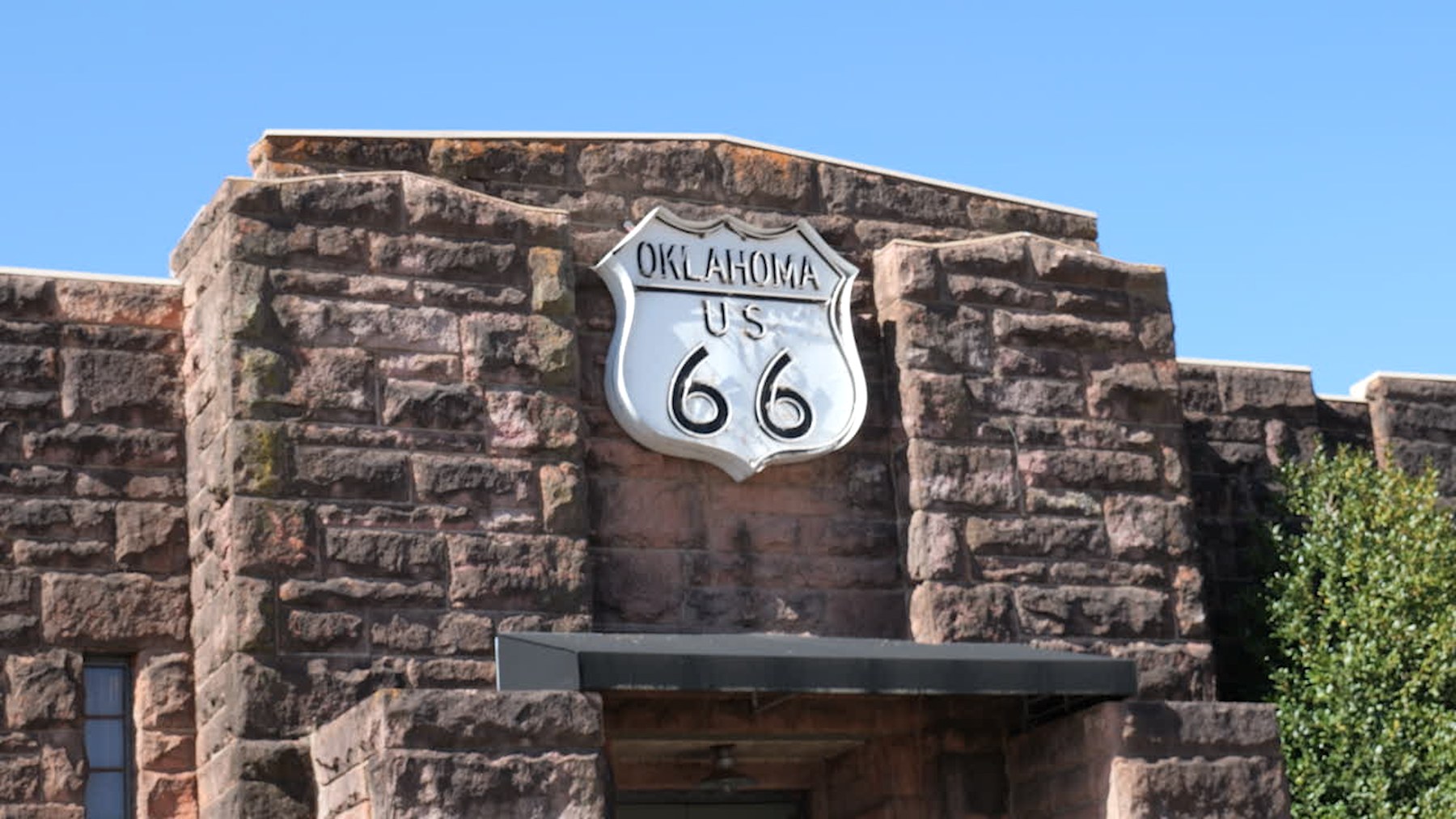
During our visit, Executive Director Susan Pordos gave us a tour of the building and shared the story of how an old military installation became a destination for travelers exploring the Mother Road.
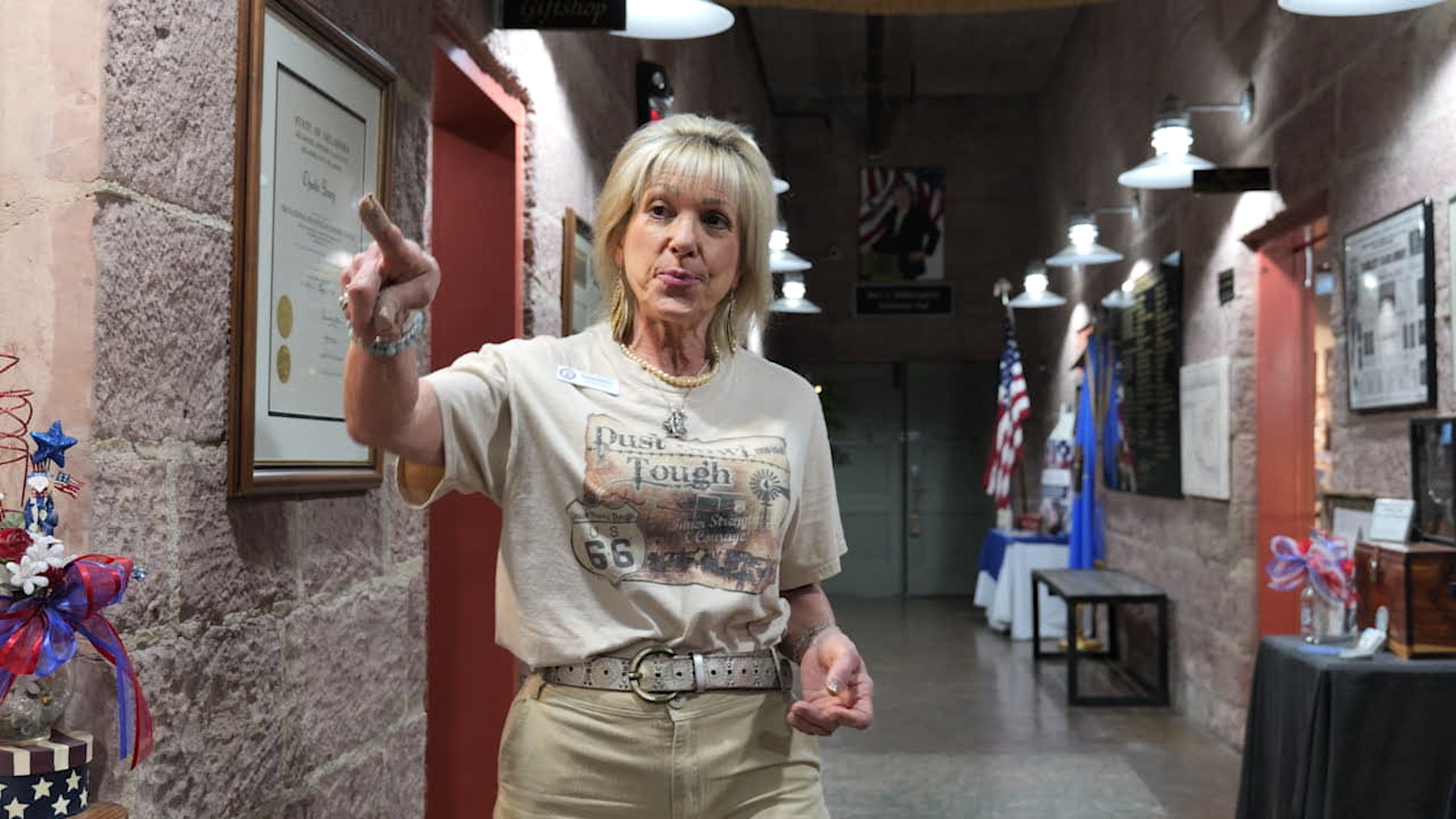
Built by Hand During the Great Depression
The Chandler armory was constructed during the 1930s as a Works Progress Administration project, part of the nationwide effort to provide employment during the Great Depression. Pordos explained that the building was completed in 1937 and served as the home of Chandler’s National Guard for decades.
The sandstone used to construct the armory came from a quarry east of Chandler, with rock hauled to the site by mule. Even the stonework tells a story.
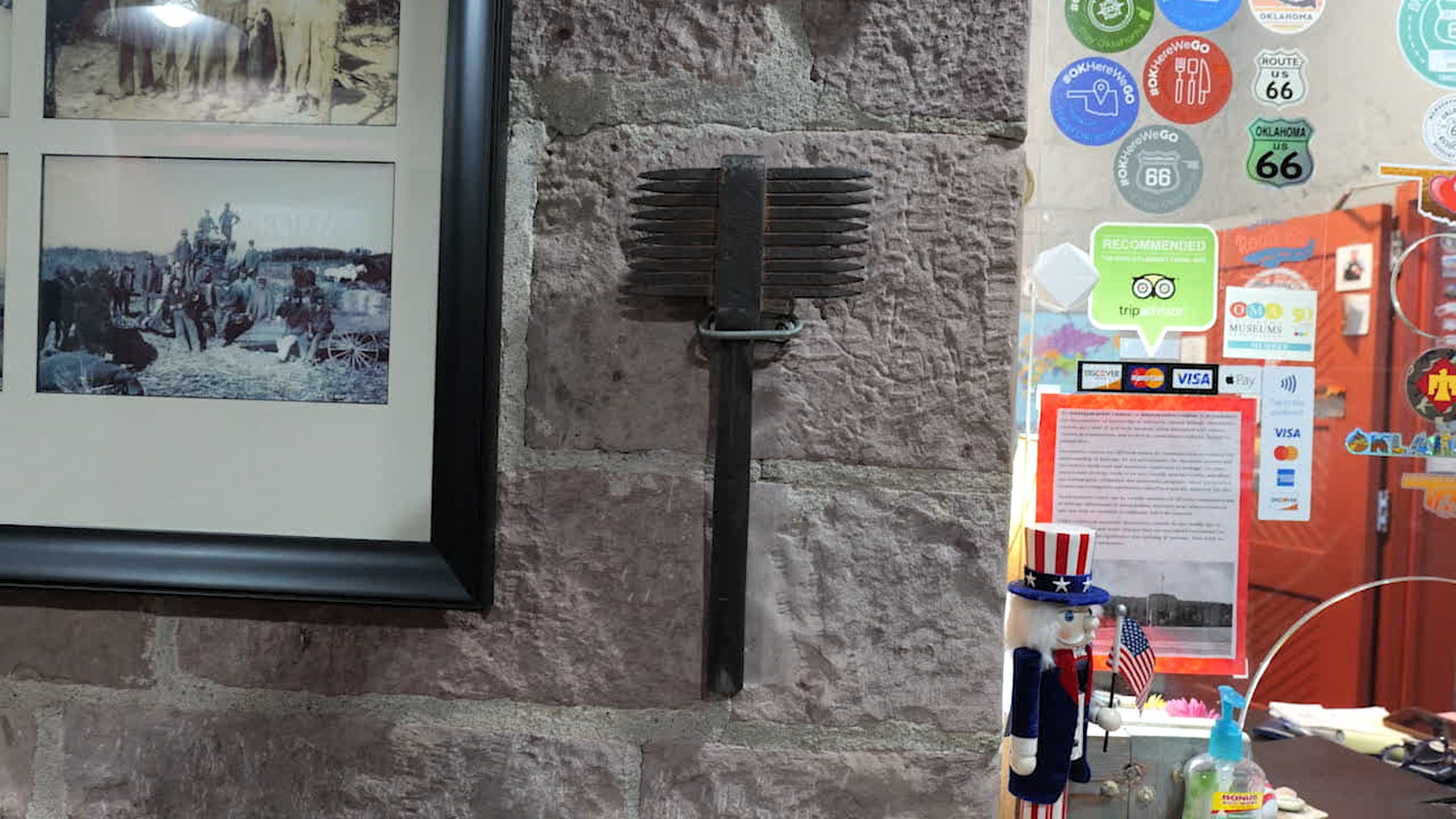
During the tour, Pordos showed us an antique stone Crandall, the type of hand tool workers used to create the textures and indentations still visible across the building. The exterior walls are remarkably thick, giving the old armory the substantial appearance of a building designed to last.
A tremendous amount of work went into making sure it did. More than 250 men worked the local quarry during construction, while crews at the armory dressed and lifted stone by hand. Workers also cut and installed more than 156,000 wooden blocks for the drill hall floor. For Chandler, construction of the armory was not simply a new government building — it provided jobs when families desperately needed them.
From National Guard Armory to Abandoned Building
The armory remained home to Chandler’s National Guard until a newer facility was constructed. After the Guard left, the old building struggled to find a permanent purpose.
Pordos explained that it sat largely unused for years and deteriorated badly. Eventually, a group of local residents called the Old Armory Restorers decided the building was worth saving. The group organized in 1998 and began the long process of bringing the armory back to life.
With grant funding, matching funds and years of work, the restoration eventually paved the way for the Route 66 Interpretive Center to open in 2007. The situation had once become serious enough that Chandler officials considered demolishing the deteriorating structure. Instead, local preservation efforts gave it another chapter.
History Around Every Corner
The military history never disappeared when Route 66 moved in.
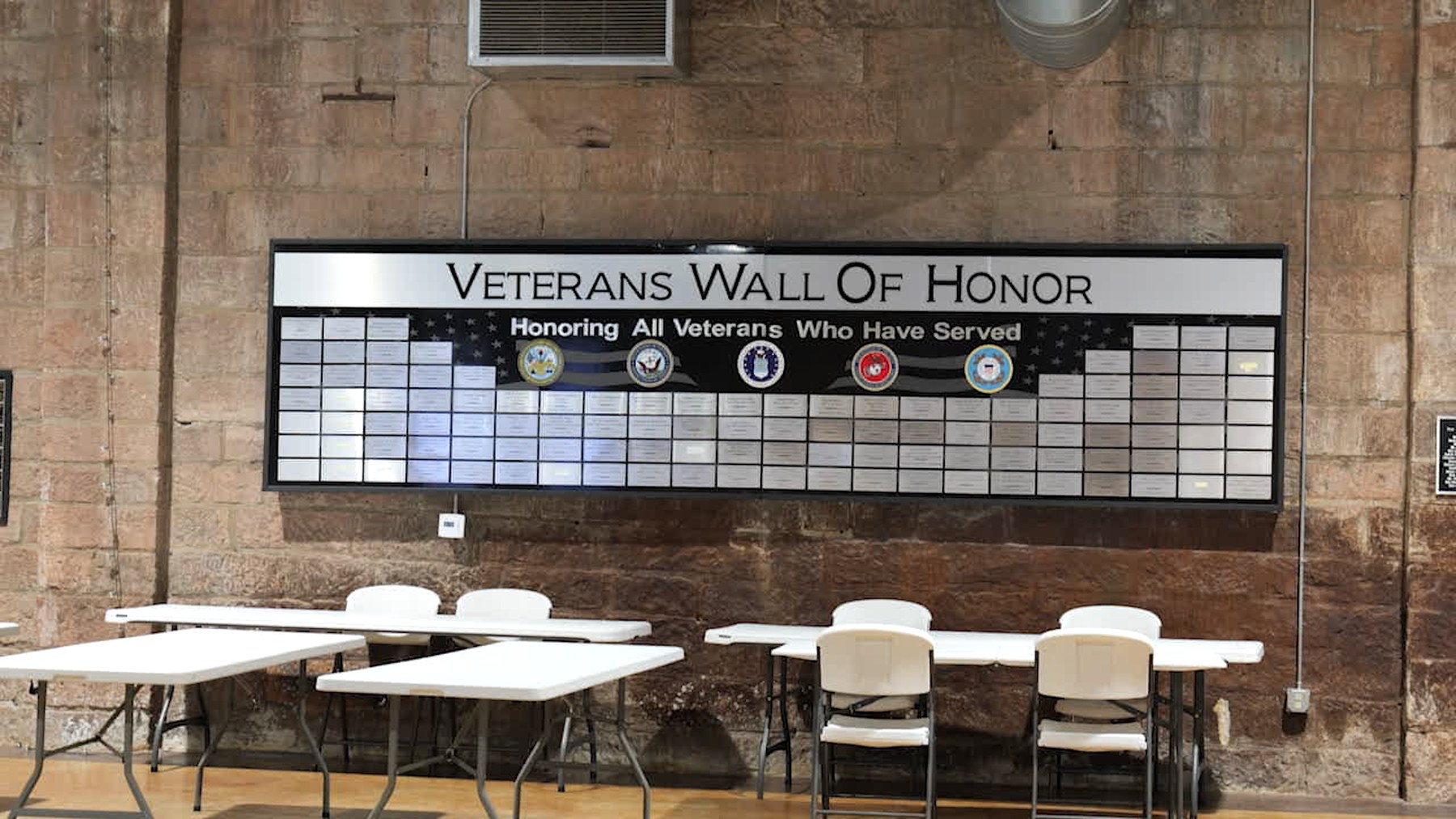
One hallway is named for General Roy Hoffman, whom Pordos described as the father of the Oklahoma National Guard. The former drill hall has been transformed into a large event space, while a Veterans Wall of Honor recognizes the branches of the military and people who contributed to the restoration.
Visitors can also see photographs documenting what the building looked like before and during its rehabilitation. Another room contains a mural by Colorado Springs artist Douglas Rouse depicting the early 1920s. A former secure area in the building has been turned into a small theater where visitors can watch historic footage.
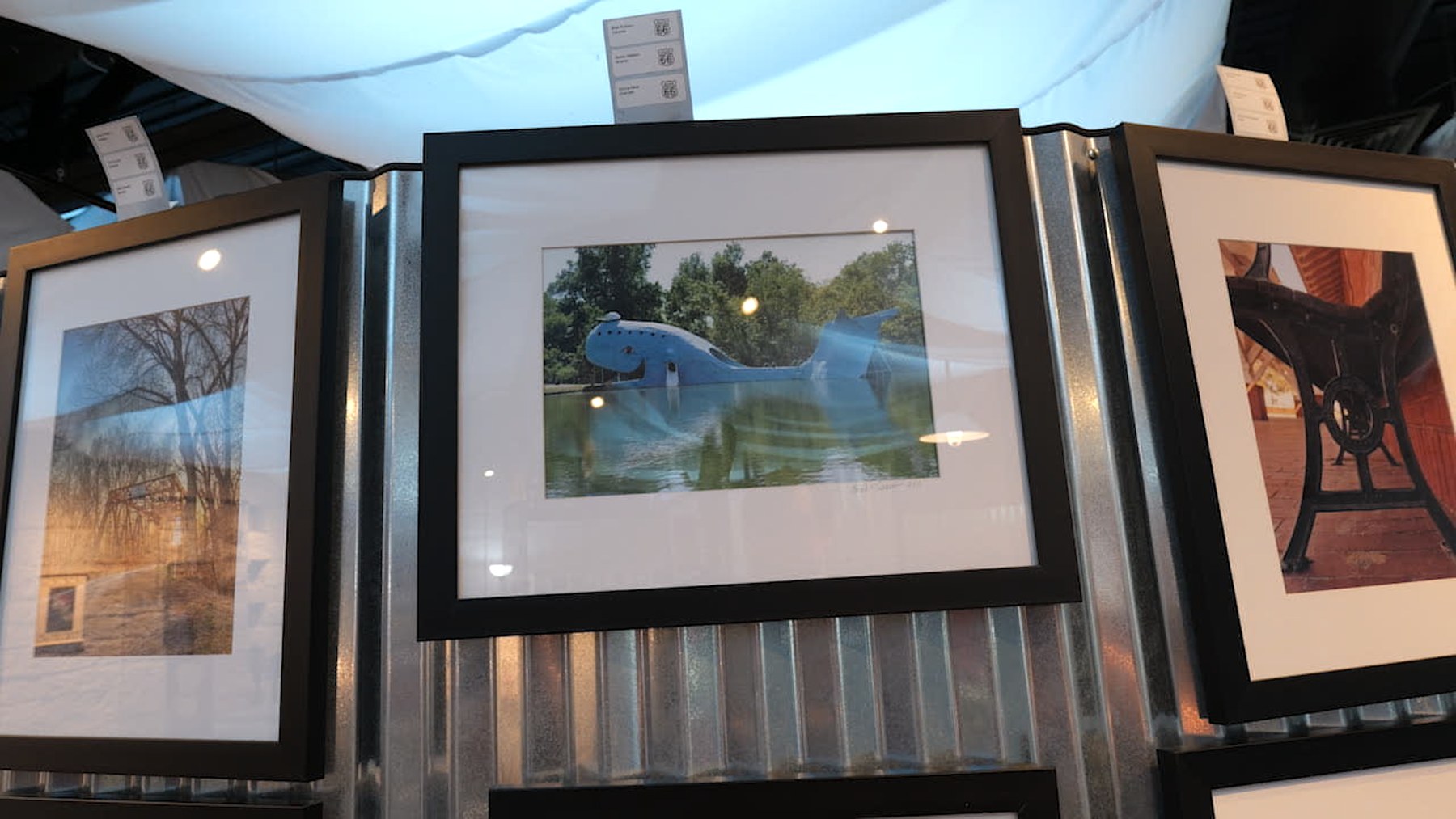
The building itself is listed on the National Register of Historic Places, preserving not only its military significance but also an impressive example of Depression-era Oklahoma craftsmanship.
A Different Kind of Route 66 Museum
The Interpretive Center was designed to feel different from a traditional museum filled with display cases. The center’s own description calls it “not your typical museum,” and that idea shows up as soon as you start moving through the building.
Pordos explained that the interior design was led by architect Hans Butzer with TAP Architecture. Butzer was also one of the designers of the Oklahoma City National Memorial, and his approach in Chandler was intended to capture the feeling and nostalgia of traveling Route 66.
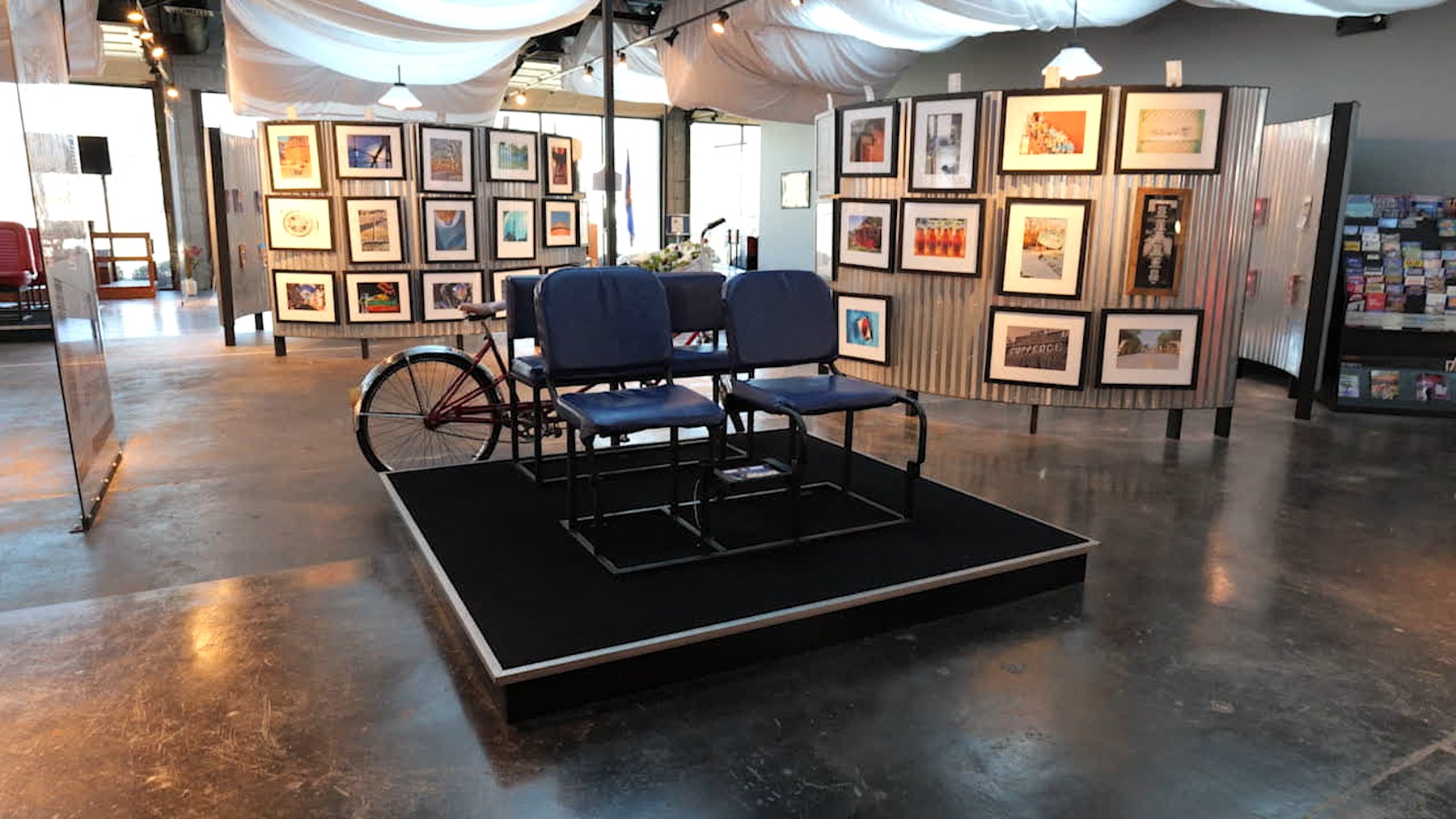
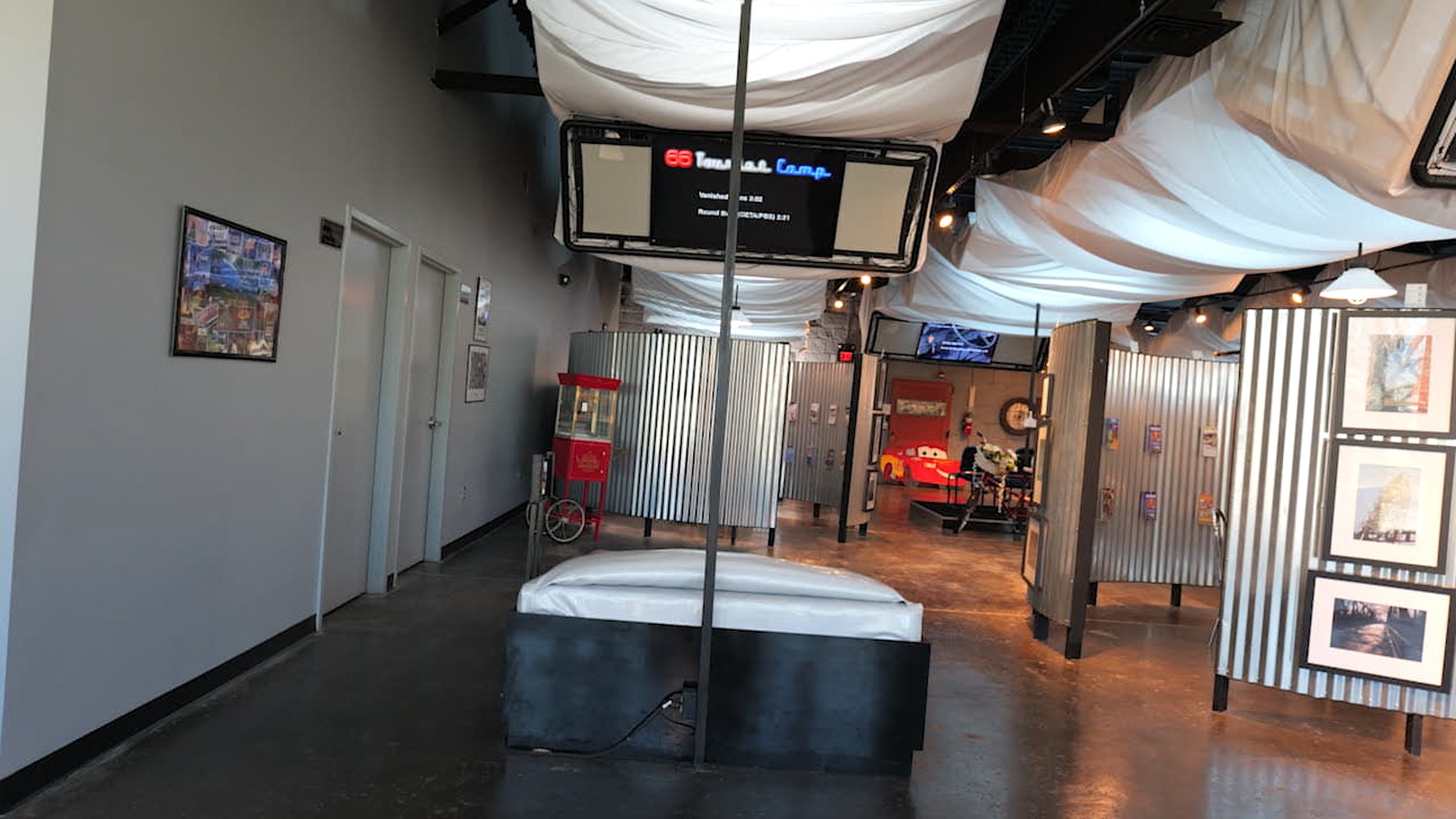
Instead of only looking at artifacts, visitors can sit in vintage automobile seats, including seats representing different eras of road travel, and watch short films about the Mother Road. TravelOK notes that the museum experience includes a Model-A Ford seat, a 1948 Willys Jeep, authentic 1965 Mustang seats, vintage billboards and virtual motel rooms with themes such as “Vanished Icons” and “Neon Nights.”
That makes the center feel less like a room of objects and more like a stop where the building, the videos, the seats, the old highway imagery and the town around it all work together.
Don’t Skip the Gift Shop
After exploring the museum, leave yourself some time for the gift shop.
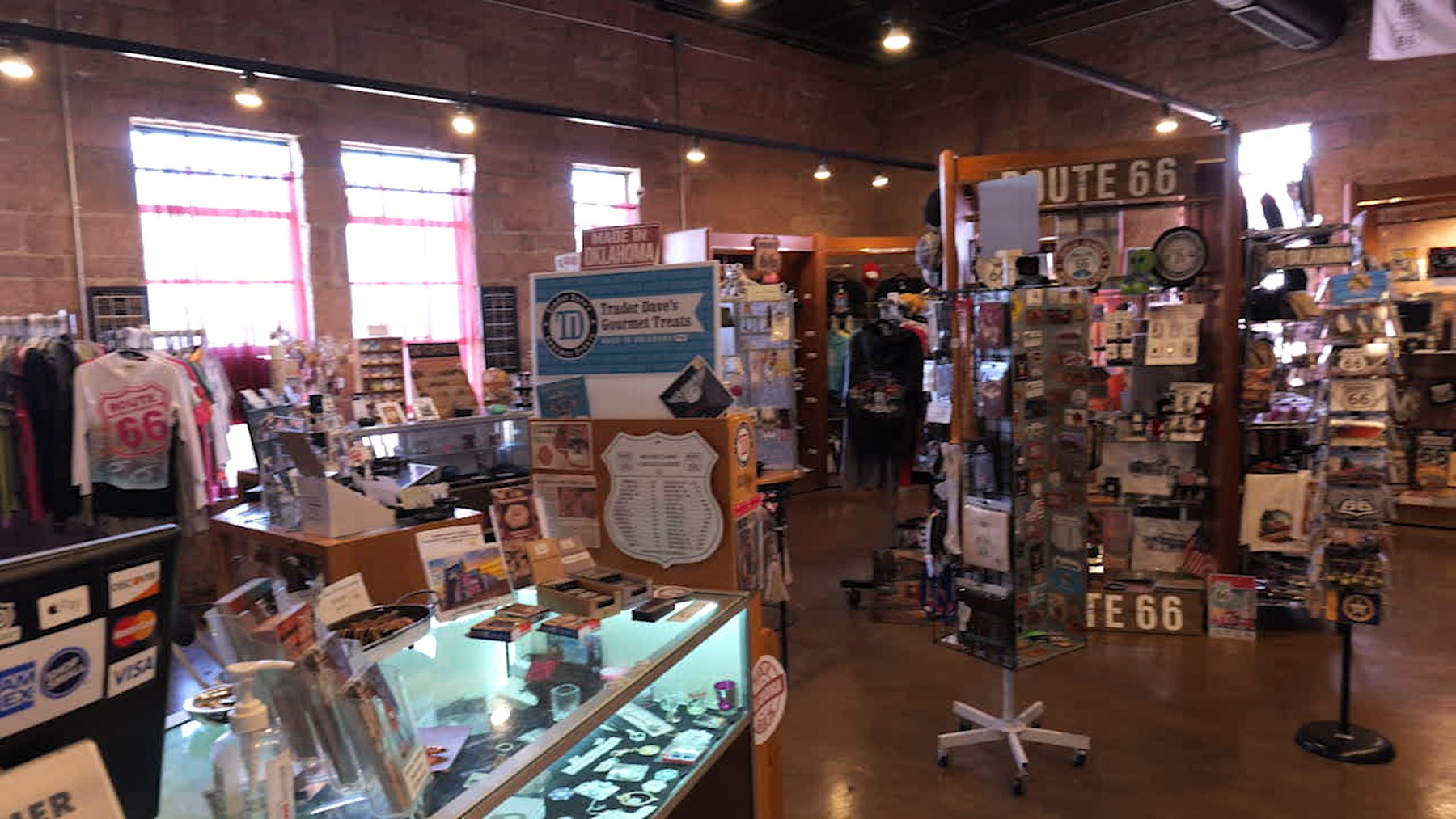
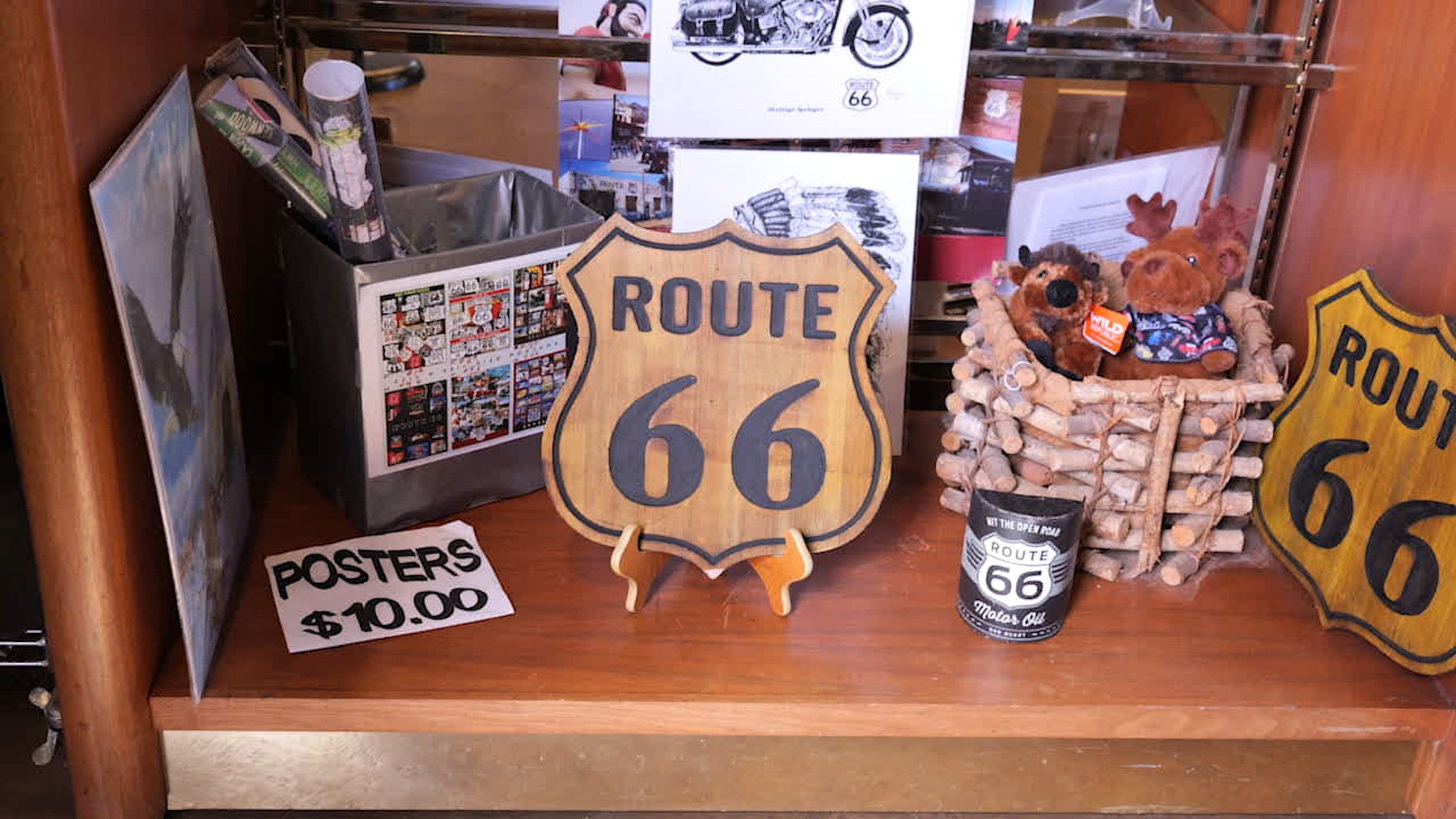
If there is something you want with Route 66 on it, there is a pretty good chance you’ll find something here. The shop is packed with Mother Road memorabilia and artwork, making it an especially good stop for travelers looking for a souvenir from their Oklahoma Route 66 trip.
The shop also features work from local suppliers and artists, including items highlighting Native American craftsmanship.
A Building Worth Saving
Maybe the most interesting thing about the Route 66 Interpretive Center is that there are really two histories happening at once.
There is the story the exhibits tell — the automobiles, motels, communities and people who made Route 66 famous.
Then there is the story of the building surrounding them.
It went from a Depression-era public works project to a National Guard armory, through years of deterioration and an uncertain future, before a group of local people decided it was worth saving.
Today, travelers from Oklahoma and around the world walk through those same sandstone walls to learn about another piece of American history.
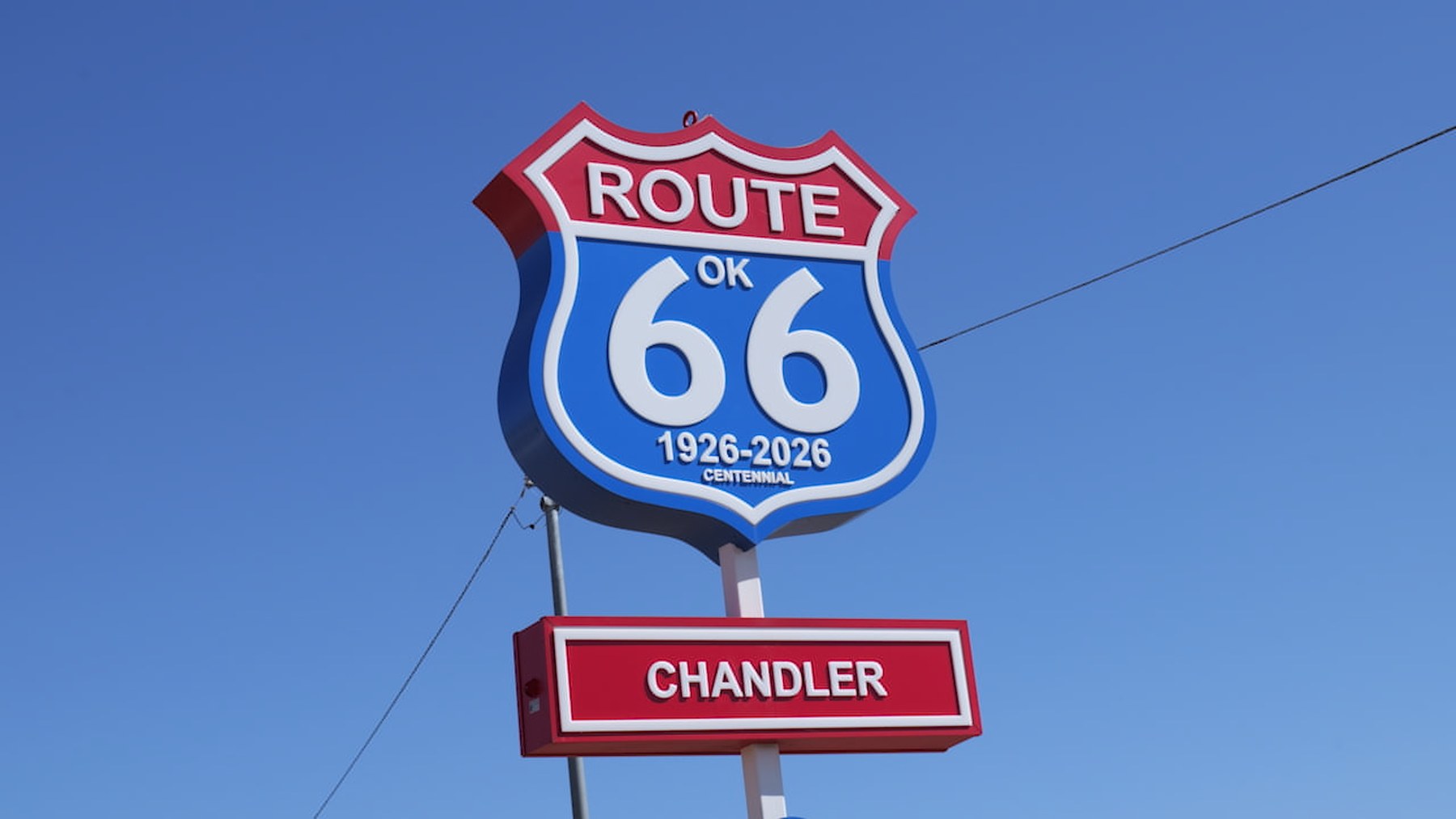
You can find the Route 66 Interpretive Center at 400 E. 1st Street in Chandler, Oklahoma. If you’re making your way down the Mother Road, it’s worth stopping not only for what is displayed inside, but for the remarkable old building that houses it.
- The Route 66 Interpretive Center is located at 400 E. 1st St. in Chandler, Oklahoma.
- The museum is housed in the historic Chandler Armory, a Works Progress Administration-era National Guard armory completed in 1937.
- The armory served the Oklahoma National Guard until a newer facility was built, then deteriorated before local preservationists organized as the Old Armory Restorers in 1998.
- The Route 66 Interpretive Center opened in the restored armory in 2007.
- Exhibits use video experiences, vintage vehicle seating, Route 66 imagery, armory history and a gift shop rather than only traditional display cases.
- The building is listed on the National Register of Historic Places.