I bought garlic from three places—the local farmers market, Walmart, and Sprouts—because I wanted to see what would happen if I broke ordinary bulbs into cloves and started them in trays. By planting day, I had a miniature forest of garlic greens, a surprisingly thick root mat, and a muddy garden bed waiting for them. This video follows the whole job, from the sprouted cloves to the last layer of mulch.
This was a backyard experiment, not a controlled test. The cloves were not the same variety or from the same grower, and I didn't know how any of the bulbs had been stored. Still, the difference among the trays was hard to miss.
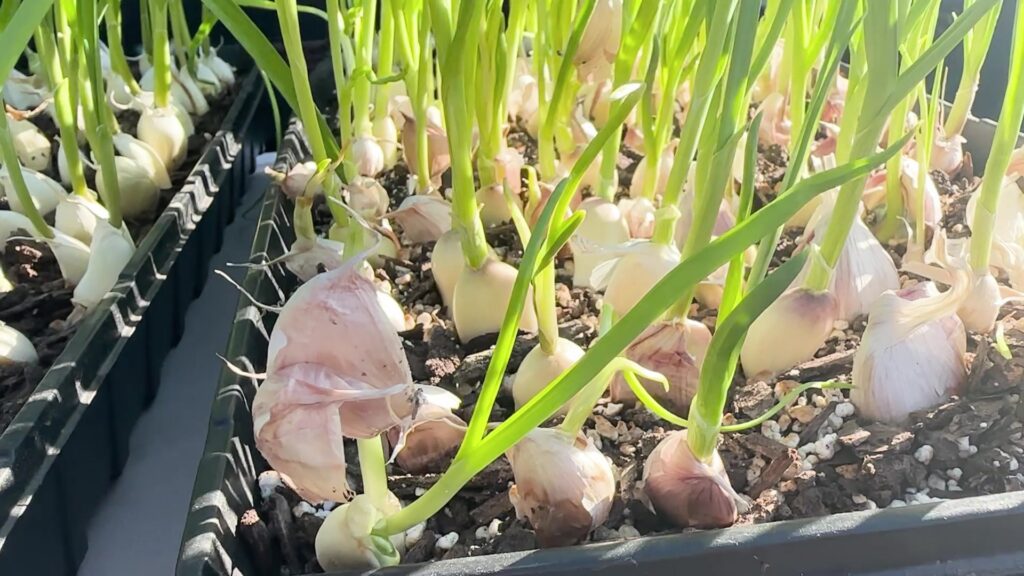
The farmers market cloves won my three-source test
The local farmers market garlic took off. The Walmart garlic did pretty well, too. The Sprouts cloves barely sprouted in my trays. That is what happened with these particular bulbs; it is not a claim that every bulb from any of those stores will behave the same way.
My first thought was that the Sprouts garlic might have been treated to stay dormant. That is possible: UC Davis notes that garlic can receive sprout-inhibiting treatments, and Iowa State Extension says store garlic is often treated to prevent sprouting. But I have no evidence about how my specific Sprouts bulb was grown or handled. Variety, age, and storage conditions could also matter. I can report the result, not prove the cause.
If you're buying garlic specifically to plant, reputable seed garlic is the safer bet. University of Maryland Extension recommends disease-free planting stock because grocery bulbs can carry problems into a garden bed. I had already started this experiment with grocery and market bulbs, so I continued with the healthy-looking starts I had.

I had to loosen the bed after two rainy days
Before moving the garlic outside, I checked the bed where I had added a good amount of compost. We'd had rain for two days, and the soil had settled and compacted. I fluffed the planting area back up so I wasn't pushing delicate new roots into a dense, soggy slab.
That soil work matters beyond this one rainy weekend. Oklahoma State University Extension says garlic prefers full sun and well-drained soil, and it recommends compost or another fertility source before planting. I wasn't trying to make a perfect laboratory bed. I just wanted loose soil that the roots could actually grow into.
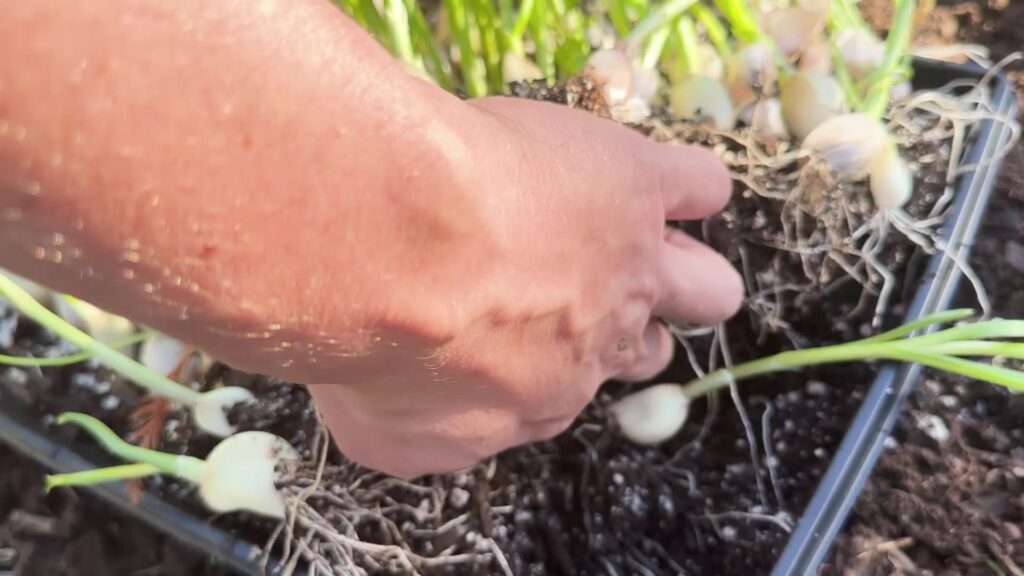
The tray had turned into one giant root mat
The tops looked good, but the part underneath was the surprise. When I lifted the tray, the roots had woven themselves together into a thick white mat. It looked like separating the cloves might rip everything apart.
This is the downside of letting a lot of garlic starts share a tray for too long. Pre-sprouting isn't a required step—OSU's standard advice is to plant individual cloves directly in the fall—but the trays made it easy to see which of my three sources woke up. By the time I was ready to plant, I needed to untangle them carefully.

The rooted cloves separated cleaner than I expected
I worked through the mat and eased the starts apart one by one. They actually came free surprisingly cleanly. I didn't have to yank hard or tear through a mass of roots to get individual plants. That was a relief after seeing how dense the bottom of the tray had become.
If you're doing this with pre-sprouted cloves, handle the roots gently and don't let them dry out while you prepare the bed. The point is to move each living clove into soil without undoing the head start it already has.
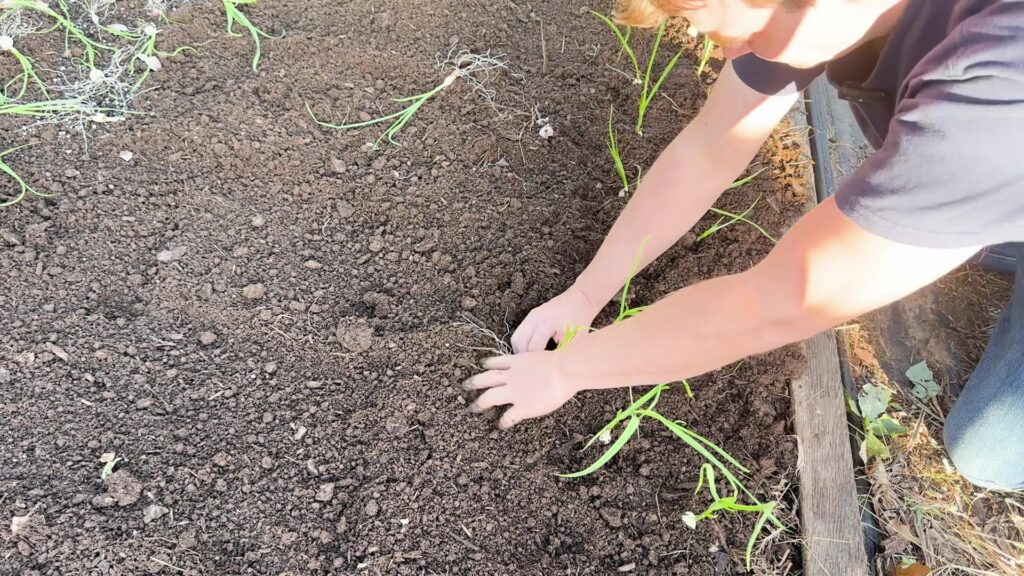
Then I planted them across the compost-amended bed
With the bed loosened and the starts separated, I set each clove into the soil and covered the roots. The video shows the planting, not a harvest; these greens still have months of growing ahead of them.
For anyone starting from unsprouted cloves, OSU's 2026 home-garden guide says to leave the papery covering on, point the root end down, and space cloves about six inches apart. Its recommended planting depth is three to four inches. Follow local guidance for your soil and climate rather than assuming the exact way my already-rooted starts sat in this bed is a universal rule.
The mulch came from my free ChipDrop pile
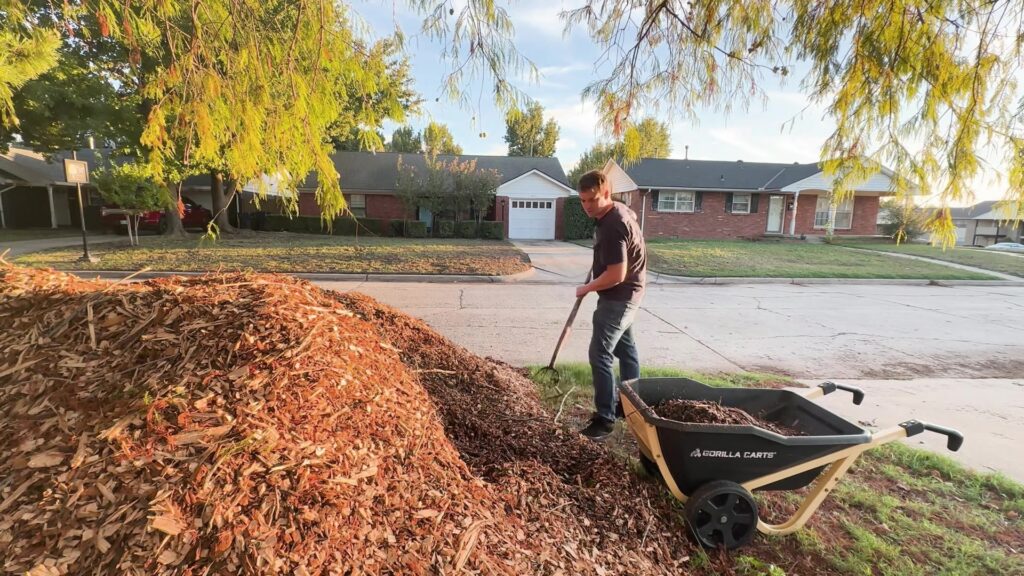
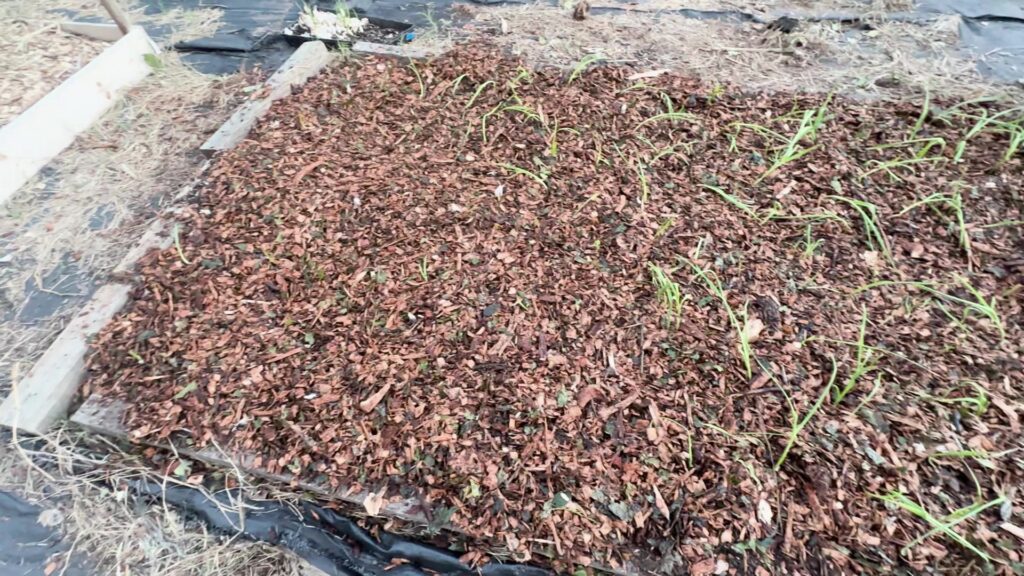
Once the garlic was in, I grabbed wood chips from the enormous free pile I got through ChipDrop and spread mulch over the bed. The pile has already gone a long way around my garden. I kept the new green shoots visible rather than burying them under a heavy layer of chips.
OSU Extension recommends mulching garlic after planting to help suppress weeds, buffer cold, and keep soil moisture steadier. If you want to see how I got this particular truckload of chips, I made a separate ChipDrop walkthrough and showed the full pile. The mulch may have been free, but spreading a pile that size is still a project.
Now the waiting starts
At the end of the day, I had a planted, mulched bed and a pretty clear winner from my little garlic-source comparison. The farmers market cloves were the stars, Walmart held its own, and Sprouts barely moved in this batch. The roots separated more easily than I feared, and the soil was in much better shape after I loosened it.
Oklahoma garlic is generally a fall-to-summer crop, so this isn't an instant payoff. I'll be watching how these starts handle winter and what kind of bulbs they make next year. The real test is whether those promising farmers market sprouts turn into good garlic—not just how tall they looked in a tray.
Garlic is generally planted in fall for harvest the following summer in Oklahoma. Oklahoma State University Extension recommends a sunny, well-drained bed with adequate fertility, individual cloves root-end down, and mulch after planting. The creator's comparison of farmers market, Walmart, and Sprouts garlic is one uncontrolled backyard observation, not evidence that any particular retailer treats all its bulbs. Some commercial garlic can be treated to inhibit sprouting; certified disease-free seed garlic is preferable when planting for a reliable crop. The mulch shown came from a free ChipDrop delivery.