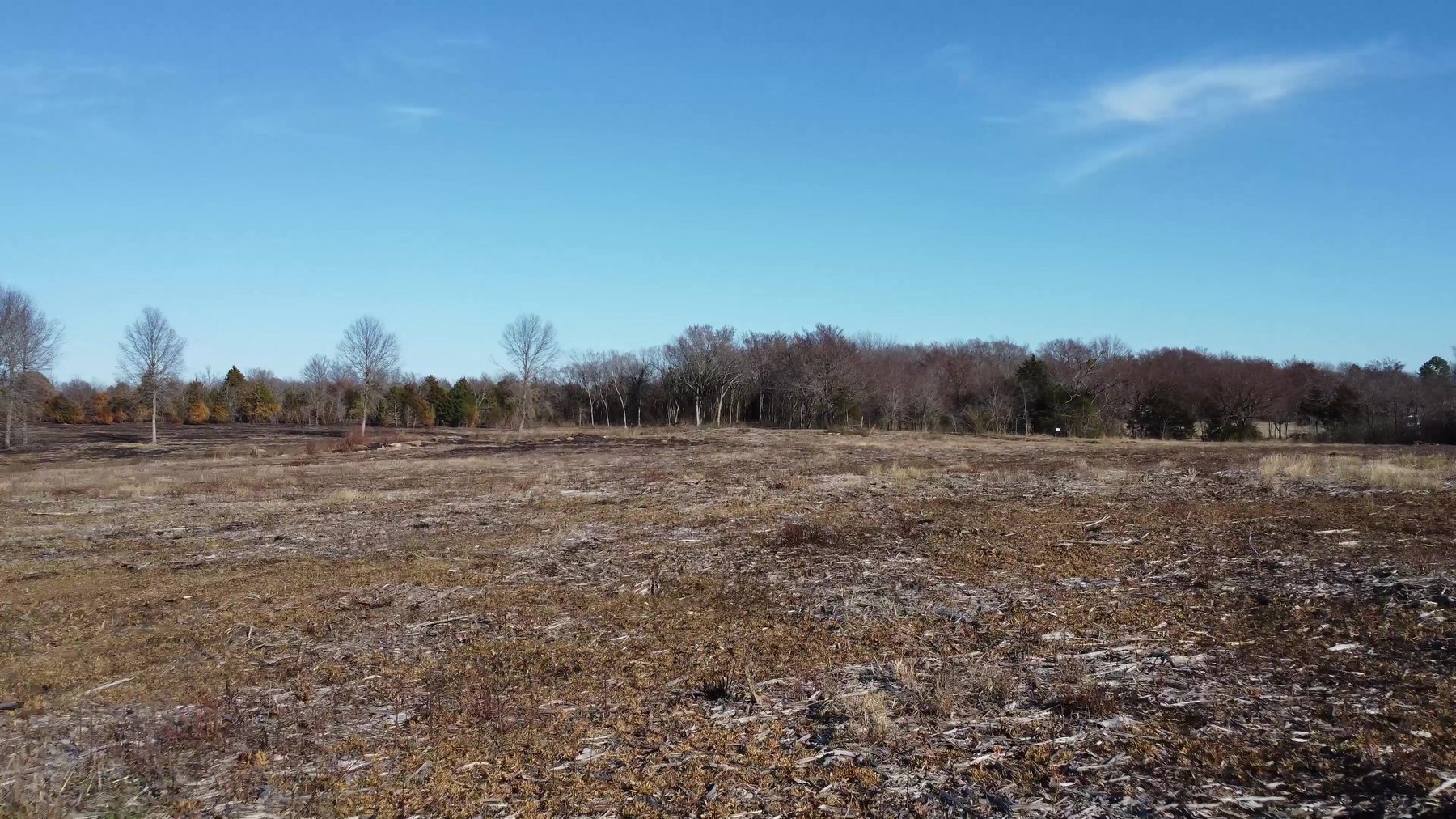
We were already deep into one of those Oklahoma weekends where every stop turns into another stop. My wife, my kid, and I had been bouncing around the state, and Honey Springs Battlefield was the last place we decided to squeeze in before calling it.
The visitor center was closed when we got there, which was a bummer. But even with the doors locked, the place still landed. Honey Springs is not a tiny roadside marker or a little patch of grass with a plaque. It is a huge, quiet battlefield near Checotah, spread across open ground, trails, treelines, and interpretive signs. Standing out there, it does not take long for the scale of the place to start doing some of the talking.
Most people picture the Civil War as something that happened far east of Oklahoma. Gettysburg, Antietam, Richmond, Atlanta. But on July 17, 1863, the war came straight through Indian Territory.

Oklahoma’s Largest Civil War Battle
The Battle of Honey Springs was the largest military clash fought in what is now Oklahoma. The Oklahoma Historical Society describes the engagement as the largest of more than 107 documented hostile encounters in Indian Territory.


Around 9,000 troops were involved. The armies were also unlike the simplified version of the Civil War a lot of us learn first. Native American soldiers fought on both sides, including Cherokee and Muscogee Creek regiments. The Union force included the First Kansas Colored Volunteers, one of the first African American regiments in the Union Army. Veteran Texas regiments were also part of the fighting.
That mix matters. Honey Springs was not just “North versus South” dropped onto an Oklahoma map. It was a battle shaped by Indian Territory, tribal politics, slavery, federal power, Confederate alliances, and the brutal realities of a war that reached much farther west than many people realize.


Why Honey Springs Mattered
Honey Springs was not random open prairie. Before and during the war, it served as a stopping place and supply point along the Texas Road, an important route connecting Indian Territory with Texas, Kansas, Missouri, and Arkansas.


During the Civil War, it became an important Confederate depot. The Oklahoma Historical Society’s battle history describes a camp with supplies, a commissary building, hospital space, tents, and springs that provided water for soldiers and livestock.
Confederate Brigadier General Douglas H. Cooper hoped to gather forces there and threaten Union-held Fort Gibson. If the Confederates could push the Union out of Fort Gibson, they could regain momentum in Indian Territory.


Union Major General James G. Blunt moved first.
Blunt’s troops crossed a rain-swollen Arkansas River, marched through the night, and attacked before Confederate reinforcements could arrive. The rain mattered. Wet gunpowder caused problems for some Confederate weapons, and the fighting around Elk Creek became fierce before the Confederate line finally broke.

A Turning Point in Indian Territory
The Union victory at Honey Springs changed the war in Indian Territory. After the battle, Confederate forces lost control north of the Arkansas River. The road toward Fort Smith opened to Union troops, and Confederate resistance in the region never again had the same large-scale momentum.
One of the reasons Honey Springs still feels powerful is that the modern landscape has not swallowed the story whole. The site is preserved by the Oklahoma Historical Society, listed on the National Register of Historic Places, and designated a National Historic Landmark.
Today, visitors can explore more than 1,000 acres, with walking trails and interpretive signs covering the Union bivouac area, lines of battle, part of the old Texas Road, Elk Creek, the final action, and the Honey Springs/Confederate depot area.
The Quiet Part Is the Point
Because the visitor center was closed when we stopped by, this visit turned into more of a battlefield walk-and-look than a full museum tour. But honestly, that kind of worked.
Honey Springs is one of those places where the quiet is part of the experience. You are looking across a field that does not seem dramatic at first glance, and then you remember what happened there: Native, Black, and white soldiers fighting in Indian Territory in the middle of a war most people still mentally place somewhere else.
It is not just a Civil War site. It is an Oklahoma site. It is a Native history site. It is a Black military history site. It is a reminder that the “western edge” of the Civil War was not some footnote. It was full of people making impossible choices in a place that would eventually become our state.
So when you stand at Honey Springs, you are not just looking at a quiet Oklahoma field. You are standing where the Civil War reached Indian Territory — and where the future of the region shifted.
Details
- Honey Springs Battlefield is near Checotah, Oklahoma.
- Address: 423159 E 1030 Road, Checotah, OK 74426.
- The site is managed by the Oklahoma Historical Society.
- Check current hours and visitor center information before you go.
- Official site: https://www.okhistory.org/sites/honeysprings