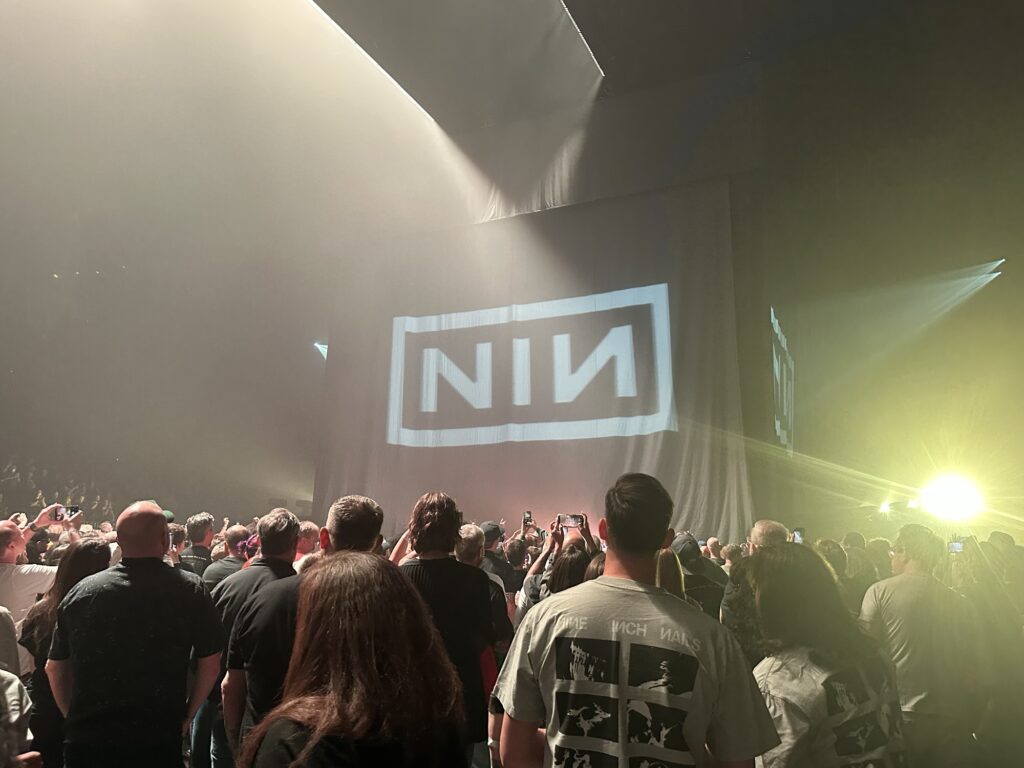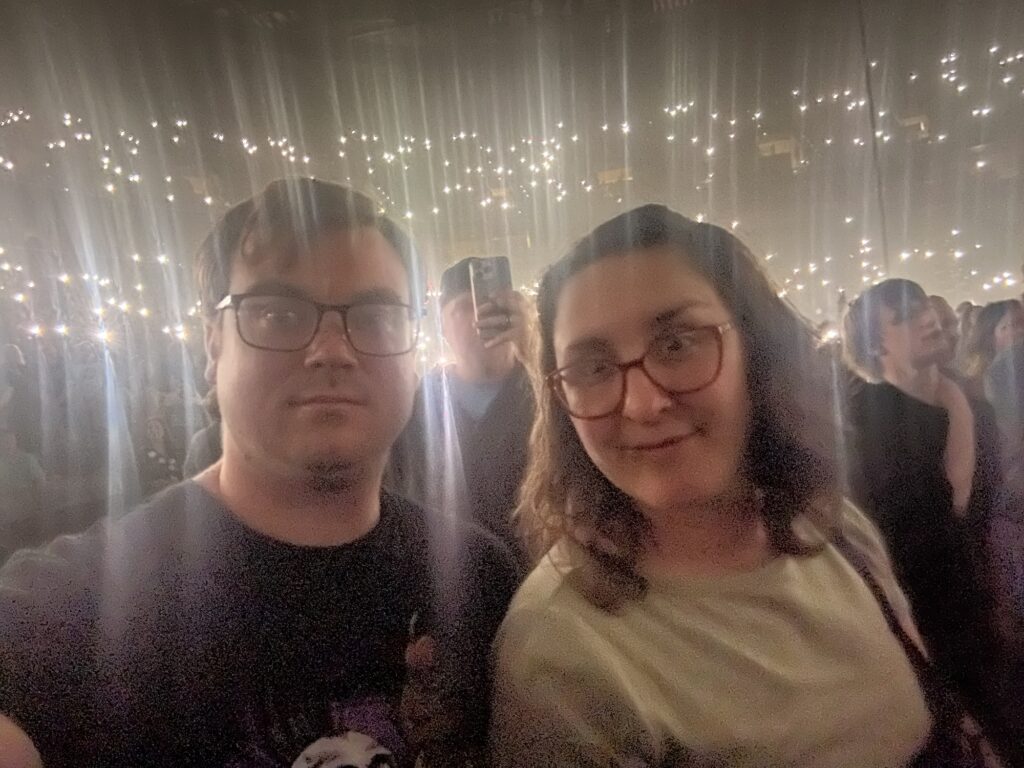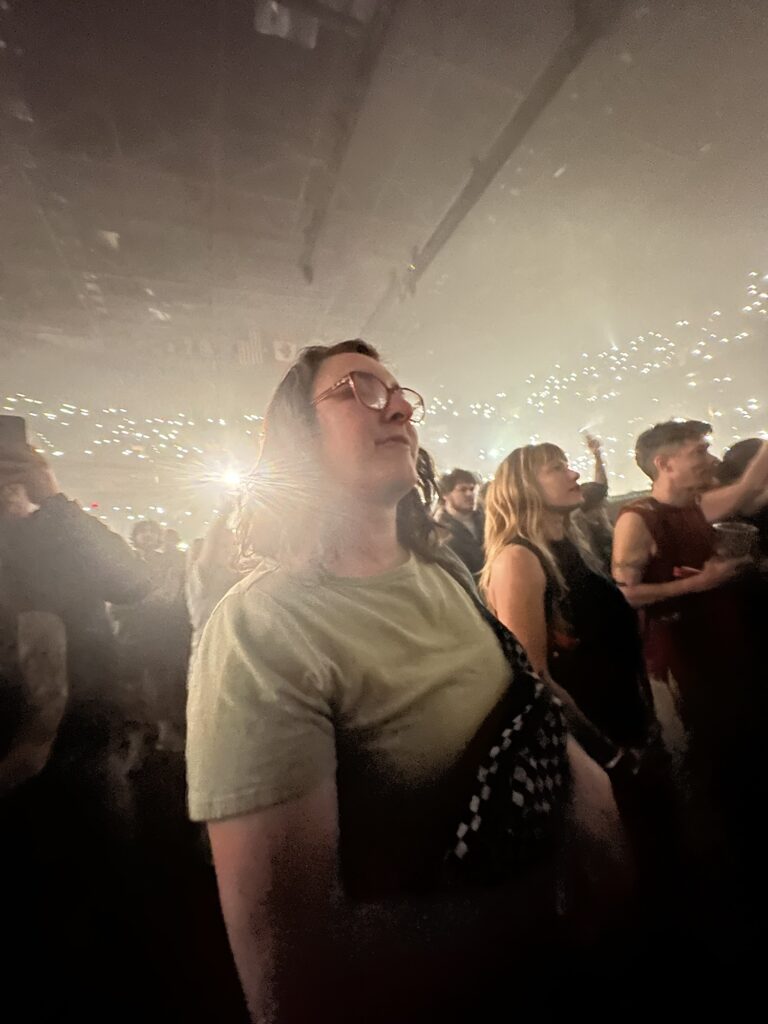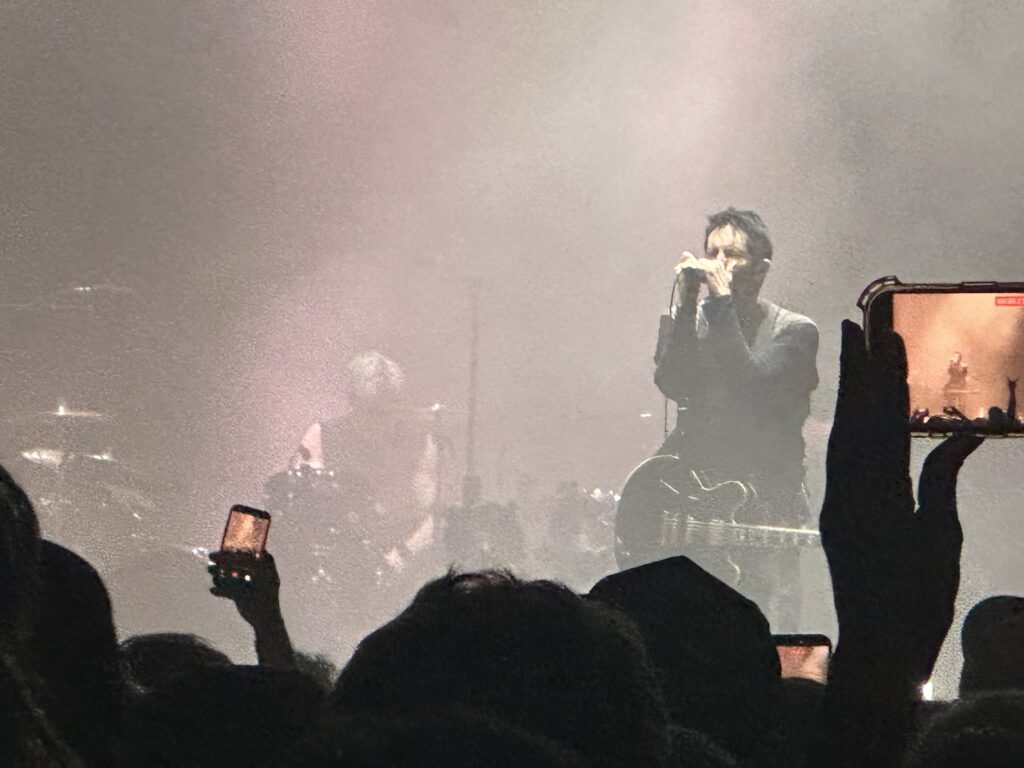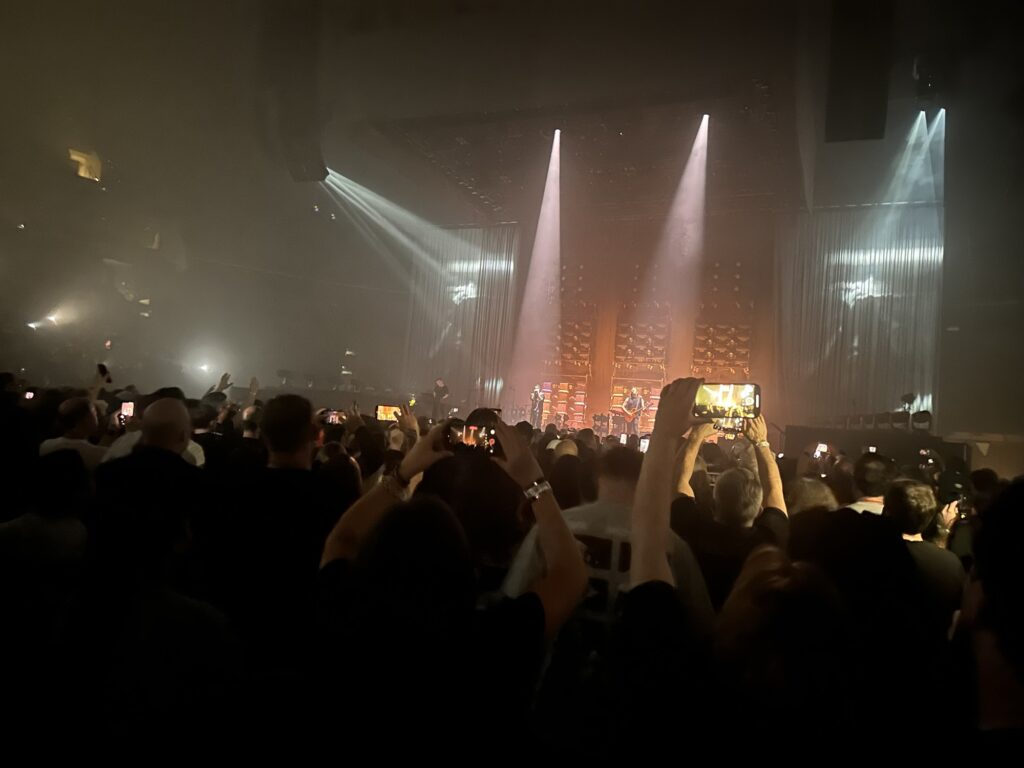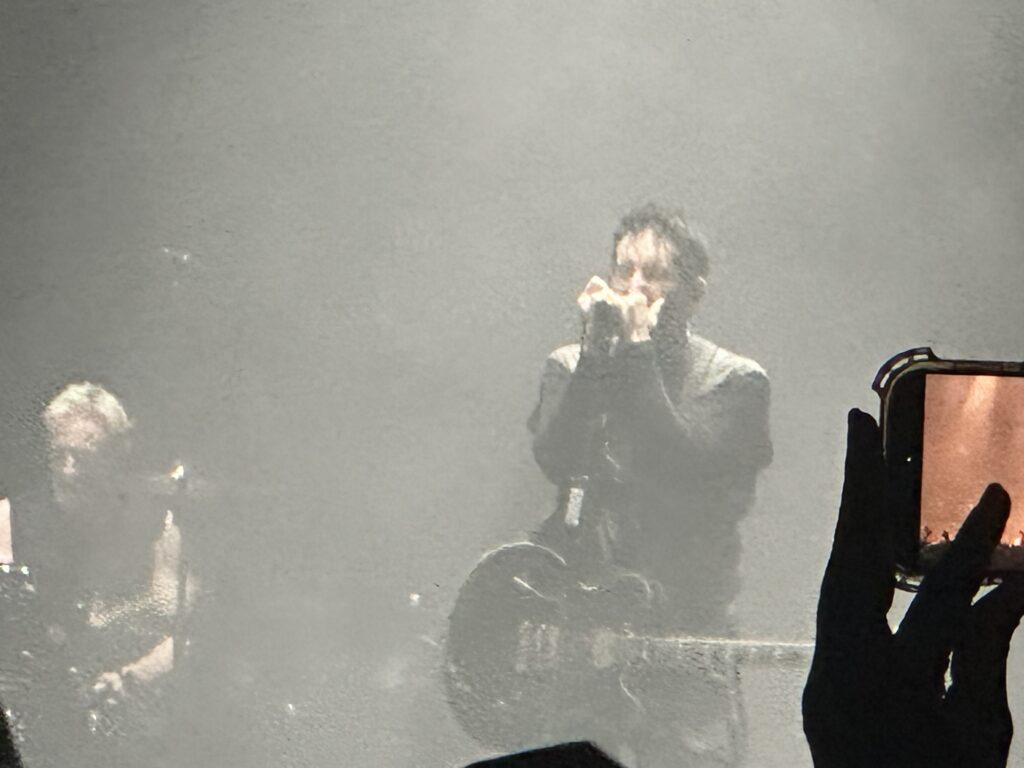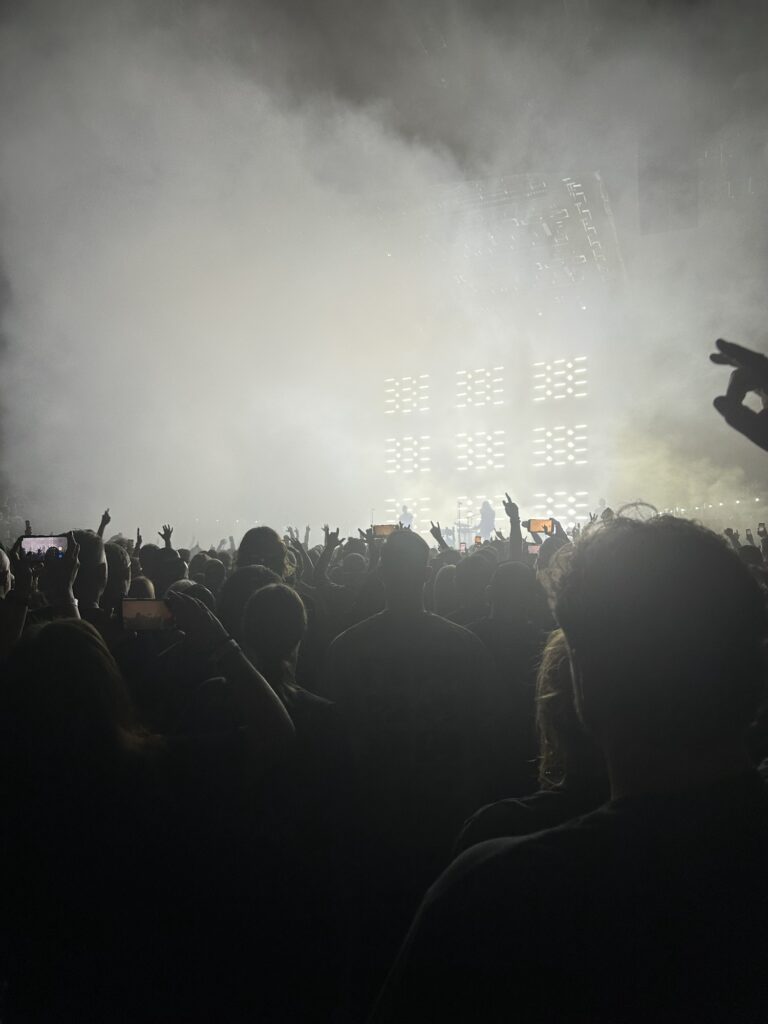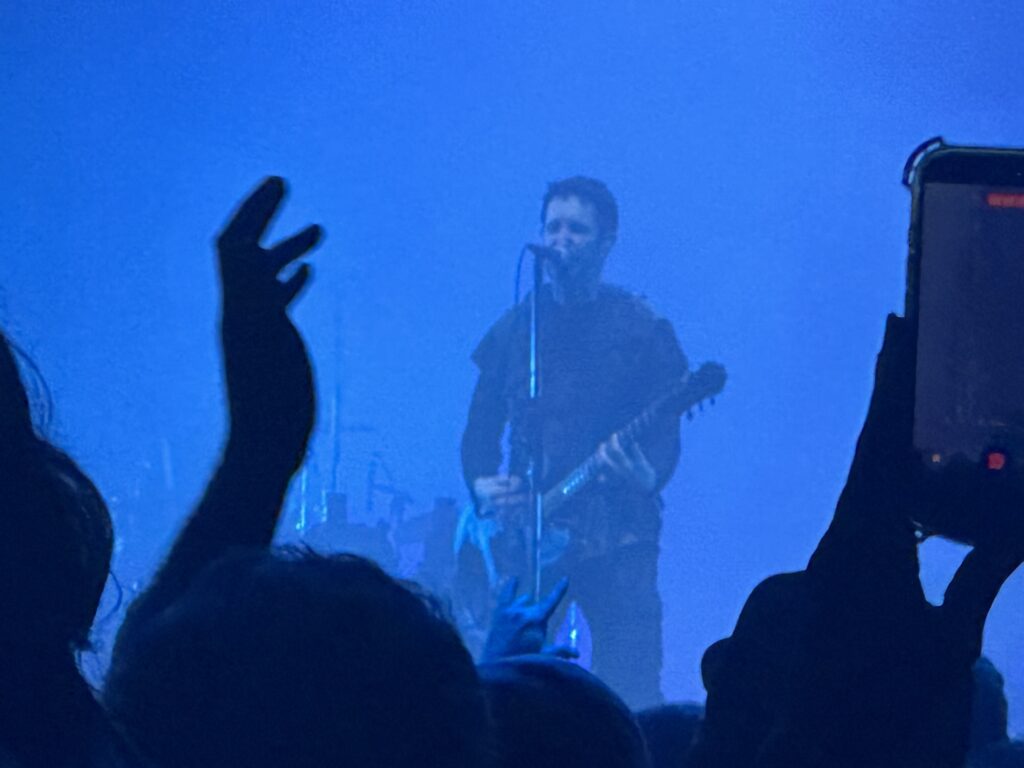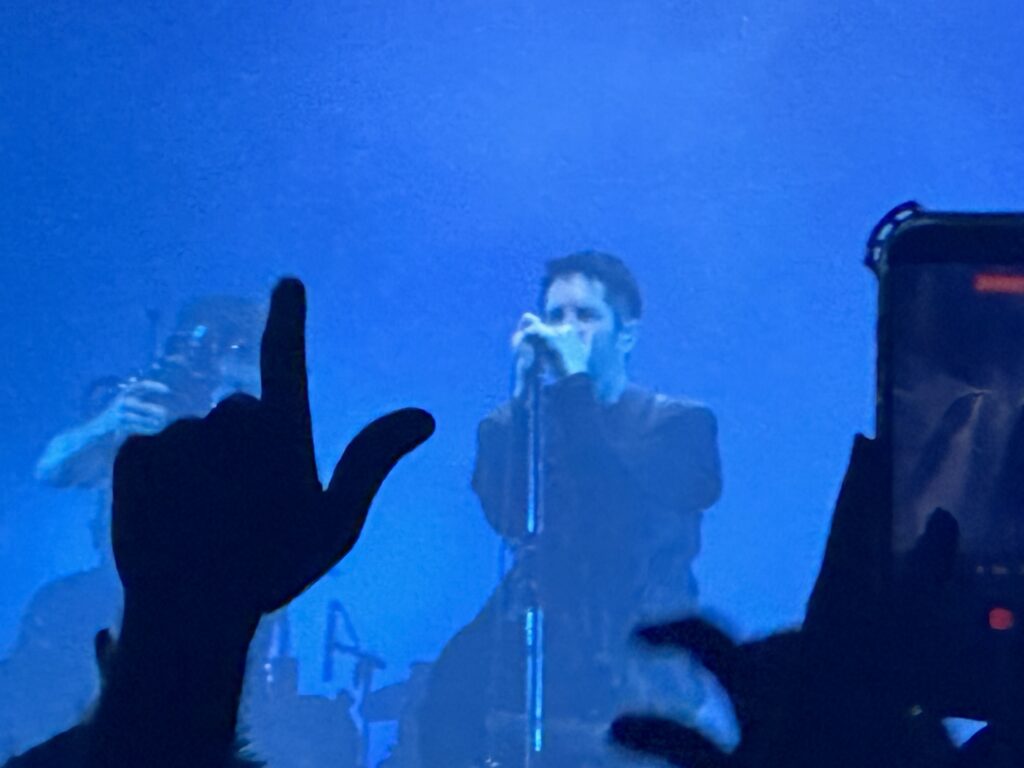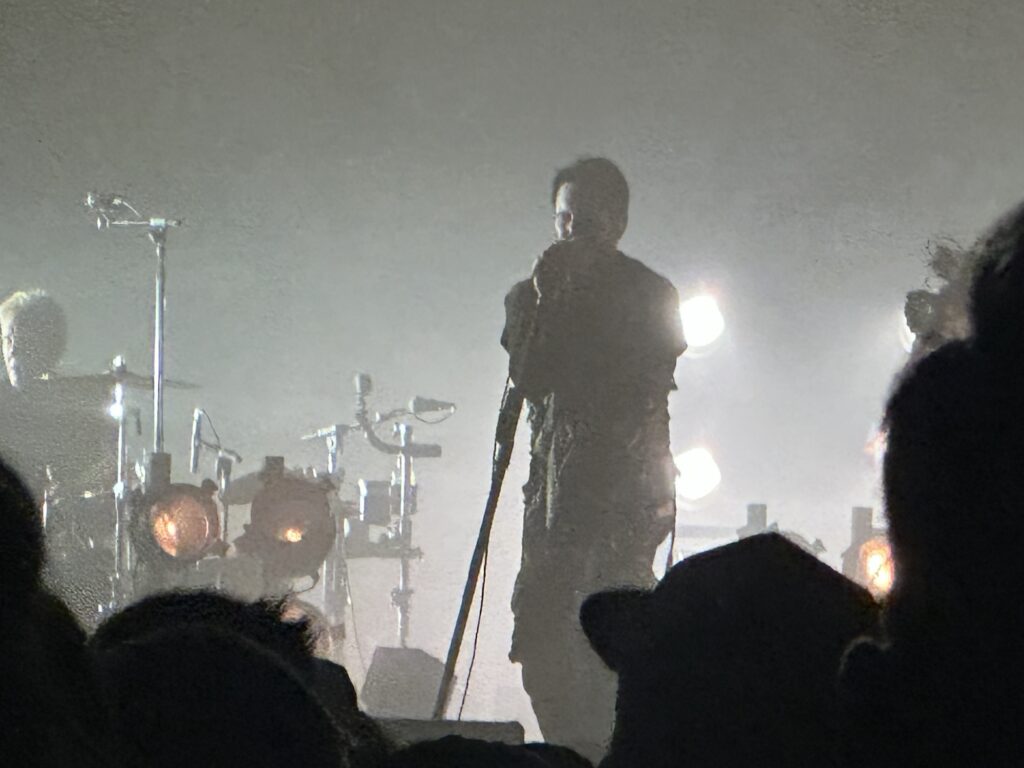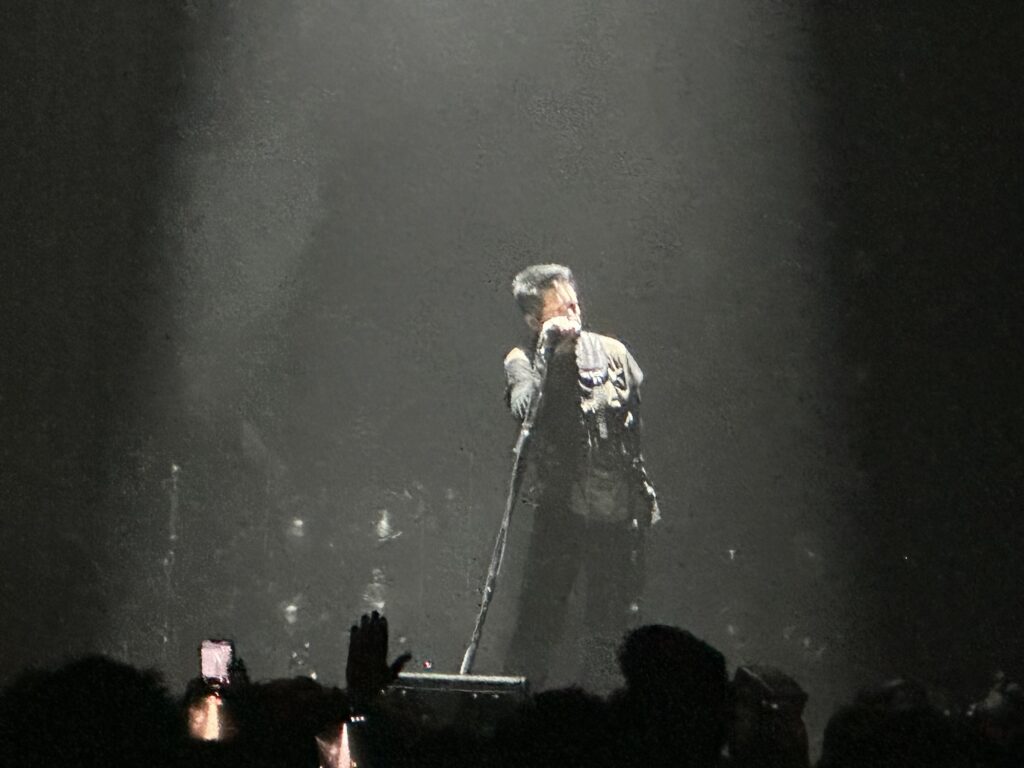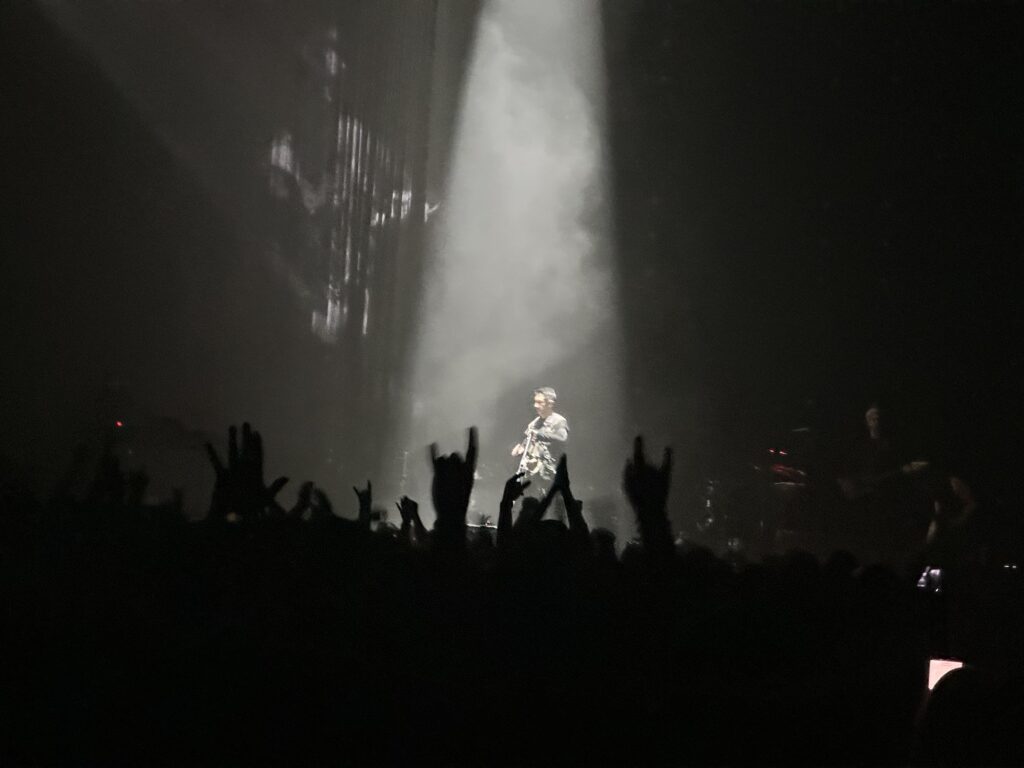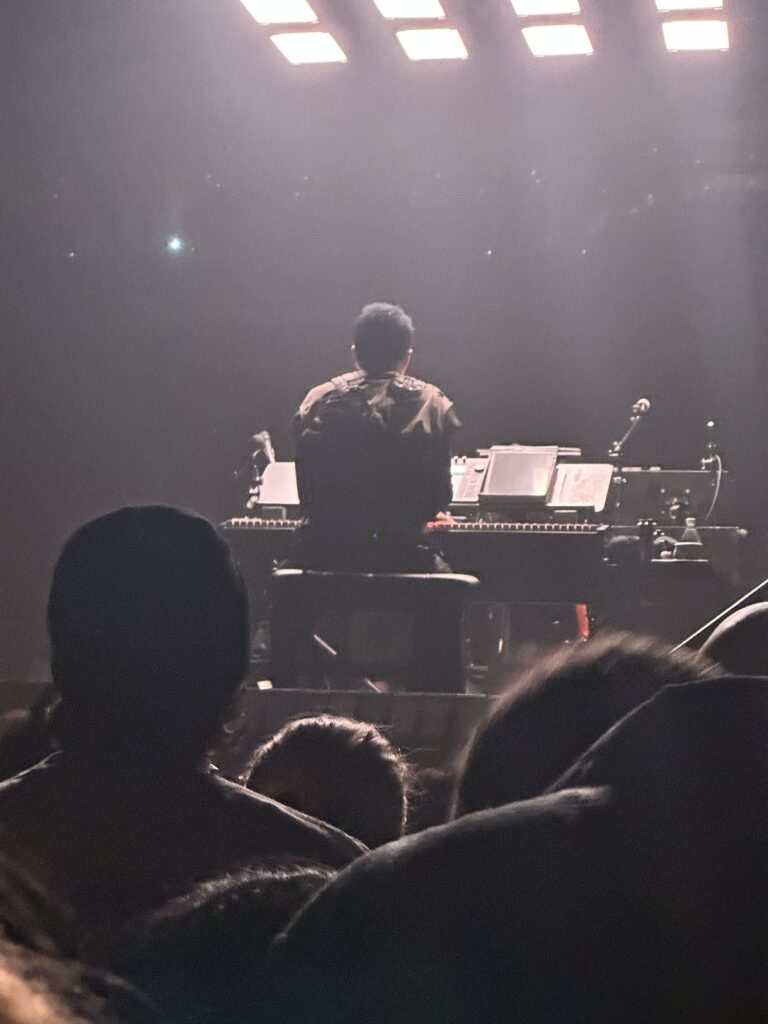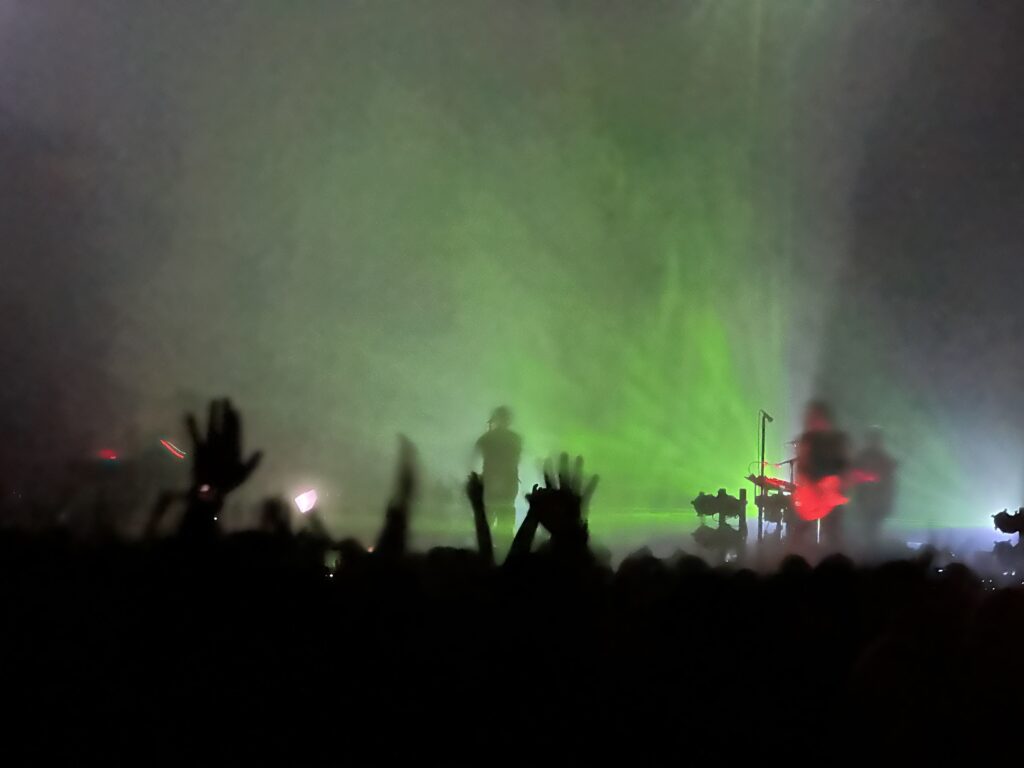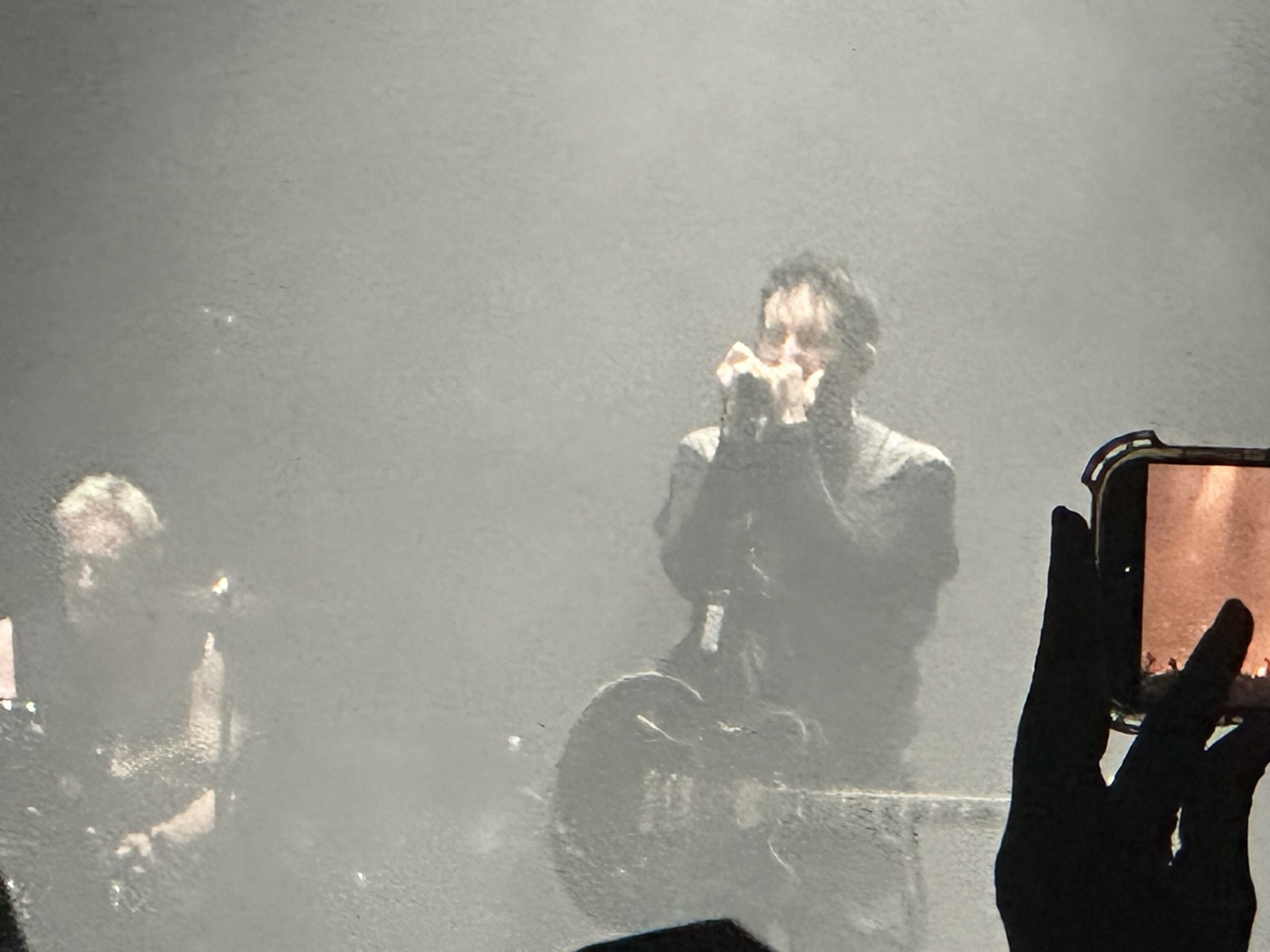
On February 27, 2026, we drove to Tulsa for a Christmas present that finally paid off — floor tickets to see Nine Inch Nails live.
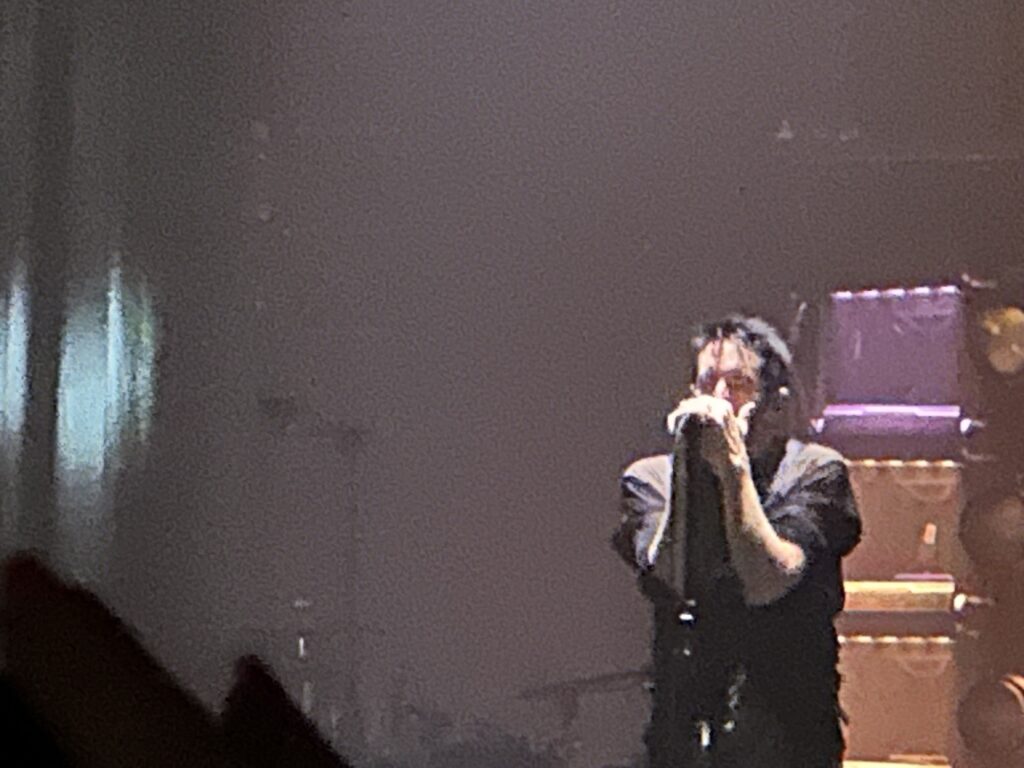
I bought them for my wife back in December. Last night, we were close enough that she leaned over at one point and said she could see their facial hair.
That’s how close we were.
Three Stages, One Arena
The show wasn’t just a typical arena setup. The band spread out across three different stages positioned throughout the arena, shifting the energy and perspective all night. It kept the crowd moving mentally, even when we weren’t physically moving.
When Trent Reznor and Atticus Ross stepped into position, it didn’t feel distant or untouchable. It felt immediate. Industrial, but intimate.
The lighting and projection design was heavy — layered visuals, shifting color washes, stark white blasts, deep shadows. It wasn’t just lights for spectacle. It was atmosphere. It felt engineered.
All the Hits (And the New One)
They didn’t hold back.
The setlist hit the classics, and the arena reacted like you’d expect — full-throated, arms up, people who’ve been carrying these songs for decades.
My personal favorite moment was when they played the main song from the new TRON movie. Hearing that cinematic, pulsing sound live in a massive arena felt different than hearing it through speakers. Bigger. Warmer. More physical.
And then they ended it the only way they really could.
“Hurt.”
There’s something about thousands of people quietly singing along to that song that still lands, no matter how many years have passed.
A Tulsa Story from the Beginning
One of the best moments of the night wasn’t even a song.
Reznor told a story about playing Cain’s Ballroom early in his career. He said he remembered looking out into the crowd and seeing a guy in the back singing every word. He talked about how that moment stuck with him — how he felt the connection and realized that’s why he loved what he was doing.
It was a simple story, but in a huge arena decades later, it hit.
From Cain’s Ballroom to a full arena production spread across three stages — and still talking about one guy in the back singing along.
That’s Oklahoma music history right there.
Close Enough to See the Details
Floor tickets are risky. You never know if you’ll be crushed, blocked, or stuck staring at someone’s phone screen.
But this one worked.
We were super close. Close enough that you could see facial expressions, the sweat, the details that don’t translate on a jumbo screen.
My wife saying she could see their facial hair became the unofficial measurement of the night.
If you can see facial hair, you’re not in the cheap seats.
Why Tulsa Shows Hit Different
There’s something about catching a major act in Tulsa that always feels slightly more personal than a coastal mega-city stop.
Artists talk more. They reference older venues. They remember smaller rooms. Oklahoma crowds sing loud and don’t try to be cool about it.
This one felt like that.
A Christmas present.
A Friday night drive.
Industrial rock in an Oklahoma arena.
And a reminder that even global acts still carry memories of small stages like Cain’s Ballroom.
Good show.
Great energy.
Worth the drive.