Stillwater has a way of turning one stop into five.
On this trip, we did the familiar Stillwater loop: Eskimo Joe’s, the original Hideaway Pizza, a downtown comic book shop, and a lot of walking around places my parents remembered from their Oklahoma State days. Both of them went to school at OSU, so part of the fun was hearing their stories about where they used to hang out and what had changed.
I try to squeeze a museum into just about every trip, and they suggested the National Wrestling Hall of Fame and Museum.

I’ll be honest. I didn’t grow up following wrestling closely. I knew enough to understand Oklahoma State’s connection to the sport, but I was not walking in as the target audience. That may be why the place surprised me as much as it did.
The National Wrestling Hall of Fame and Museum sits at 405 West Hall of Fame Avenue in Stillwater, right by the Oklahoma State University campus area. It opened in 1976 after Stillwater was selected as the permanent home for America’s wrestling museum, and the building got a major renovation in 2016 that turned it into a much more modern, interactive stop.

It does not feel like a dusty trophy room. It feels like a real museum.

Room After Room of Wrestling History
The first thing that hit me was the size.
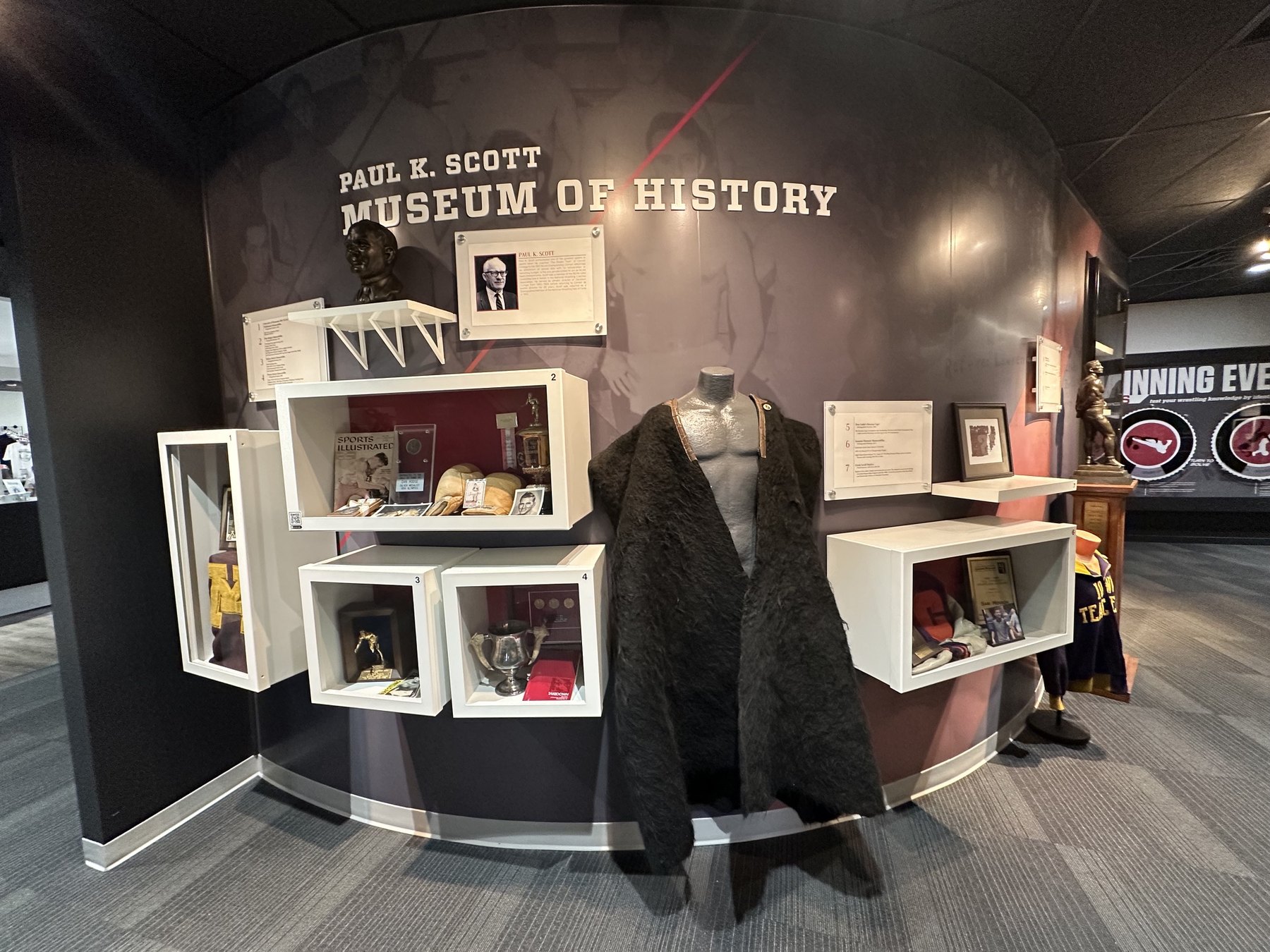
I expected a smaller hall of fame, maybe a few cases, some plaques, and a gift shop. Instead, the museum keeps going. Room after room is filled with championship belts, Olympic medals, historic uniforms, trophies, photographs, sculptures, and displays covering collegiate wrestling, freestyle, Greco-Roman, Olympic competition, and more.


The museum’s collection is considered one of the largest wrestling artifact collections in the world, and you feel that scale pretty quickly. There are displays for the casual visitor who just wants the big picture, but there is also enough depth for someone who knows the sport and wants to slow down at every case.
The interactive kiosks help, especially if you are not coming in with a mental roster of wrestling legends already built in. Visitors can watch NCAA championship match footage going back decades, which gives the exhibits a little movement and context. It is one thing to see a name on a plaque. It is another thing to watch the sport in motion.


The Hall of Honors Feels Like the Centerpiece
The John T. Vaughan Hall of Honors is the room that made the biggest impression on me.


Massive granite plaques line the space, recognizing wrestlers, coaches, officials, and contributors who shaped the sport. It has the same kind of quiet weight you get in other major sports halls of fame, except here the entire room is focused on wrestling.
Even when I did not recognize every name, I could understand the accomplishment. That is one of the better tests of a museum. Can it make you care about something you only partly understand? This one did.
The Hall of Honors also gives the building a sense of seriousness without making it feel stiff. You can tell wrestling people come here with real reverence, but it is still accessible for the rest of us who are learning as we go.
The Library Was the Surprise
The part I did not expect at all was the William S. Hein Library.
Inside the museum, there is an actual research library with books, records, tournament guides, historical materials, and archives tied to the history of wrestling. I like museums that still feel connected to preservation, not just display, and the library gave the whole place a deeper purpose.
It also made the museum feel less like a one-time tourist stop and more like a working home for the sport’s history. There are artifacts for visitors, but there are also materials for people who want to study the sport seriously.
That matters.
Good museums do more than decorate a room with old objects. They organize memory. They explain why something mattered, who carried it forward, and why anyone walking in cold should pay attention.
The National Wrestling Hall of Fame does that better than I expected.
If you are already spending a weekend in Stillwater, especially around an Oklahoma State visit, this is an easy museum to add to the day. Go eat at Eskimo Joe’s, grab pizza at Hideaway, wander downtown, then give yourself time to walk through the Hall of Fame without rushing.
You do not have to be a wrestling diehard to enjoy it. I wasn’t. But I left with a much better appreciation for the sport, its history, and why Stillwater makes sense as the place where so much of that story is kept.