There is a genuine piece of Marvel movie history hiding inside a century-old filling station on Route 66 in Warwick, Oklahoma.
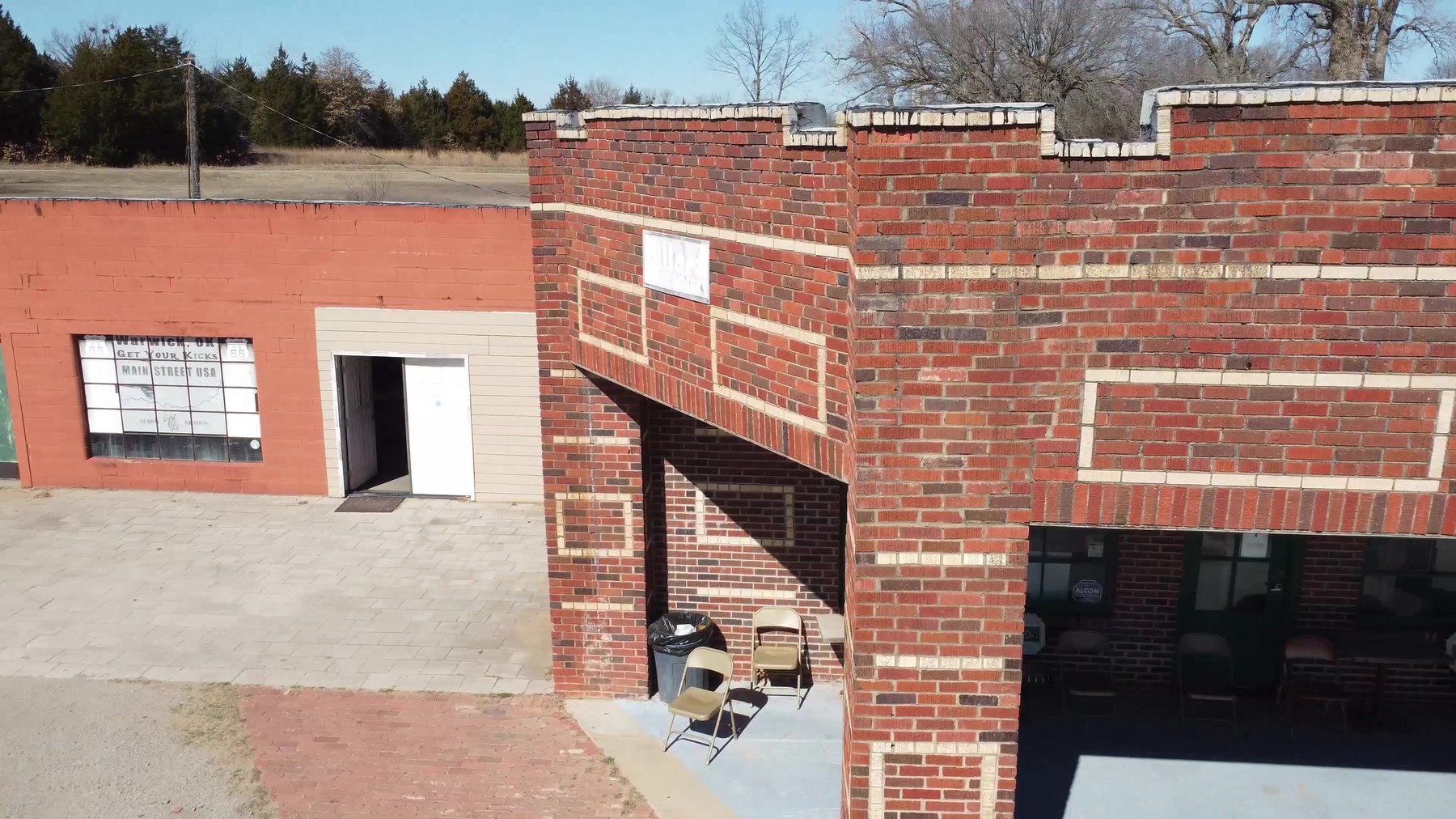
That's probably not what most people expect when they pull up to the Seaba Station Motorcycle Museum. From the road, the red-brick building looks exactly like what it is: an incredibly well-preserved piece of early Oklahoma roadside history. Inside, however, is a collection of motorcycles spanning more than a century, including something I absolutely did not expect to find in rural Oklahoma — an actual custom HYDRA motorcycle built for and featured in Marvel Studios' *Captain America: The First Avenger*.
That alone would have gotten me through the door. The history of the building makes the stop even better.
Seaba Station Is Older Than Route 66
One of the most interesting things I learned while visiting is that Seaba Station actually predates Route 66.
John Seaba constructed the station in 1921 along State Highway 7, which was part of the network of roads known as the Ozark Trails. Five years later, when the federal highway system created U.S. Highway 66 in 1926, the existing road past Seaba Station simply became part of the new route. That means the business was already serving motorists before the Mother Road technically existed.
The original station was considerably more than a couple of gas pumps. Its distinctive red polychrome brick building included open service bays where travelers could stop for gasoline and automobile repairs. The pumps sold NevrNox gasoline, while a separate brick workshop behind the station gave John Seaba room to work on vehicles. Early on, he even bought and reassembled Model T Fords.
As automobiles became more common and Route 66 traffic increased, the repair side of the business became increasingly important. In 1934, Seaba expanded into engine work and developed a specialty rebuilding connecting rods. By the late 1930s, the operation employed around 18 people — a surprisingly large business for a roadside shop in a community as small as Warwick.
World War II Changed the Station
The building adapted again during World War II.
Gasoline rationing hurt filling stations around the country, but Seaba's mechanical business found another purpose. The shop received government work repairing military vehicles traveling along Route 66, and the old open service bays were eventually enclosed as the operation transitioned into full-time engine rebuilding.
The engine business continued for decades, even after John Seaba sold it to Victor and June Briggs in 1951. The building remained associated with engine rebuilding until 1994, meaning this one little station spent more than 70 years doing some form of mechanical work before becoming the tourist attraction we know today.
In the 1990s, Sonny and Sue Preston restored the property and operated Seaba Station Antiques & Gifts. The building was placed on the National Register of Historic Places in 1995, helping preserve one of the increasingly rare examples of an early rural service station along Route 66.
Then a couple of motorcycle guys came along.
How a Filling Station Became a Motorcycle Museum
Motorcycle enthusiasts Gerald Tims and Jerry Ries purchased Seaba Station in 2007 with plans to restore more of the building's original appearance and create a museum from their motorcycle collections. Tims already owned Performance Cycle in Bethany, and the two realized that a historic filling station directly on Route 66 was about as appropriate a home for vintage motorcycles as they could possibly find.
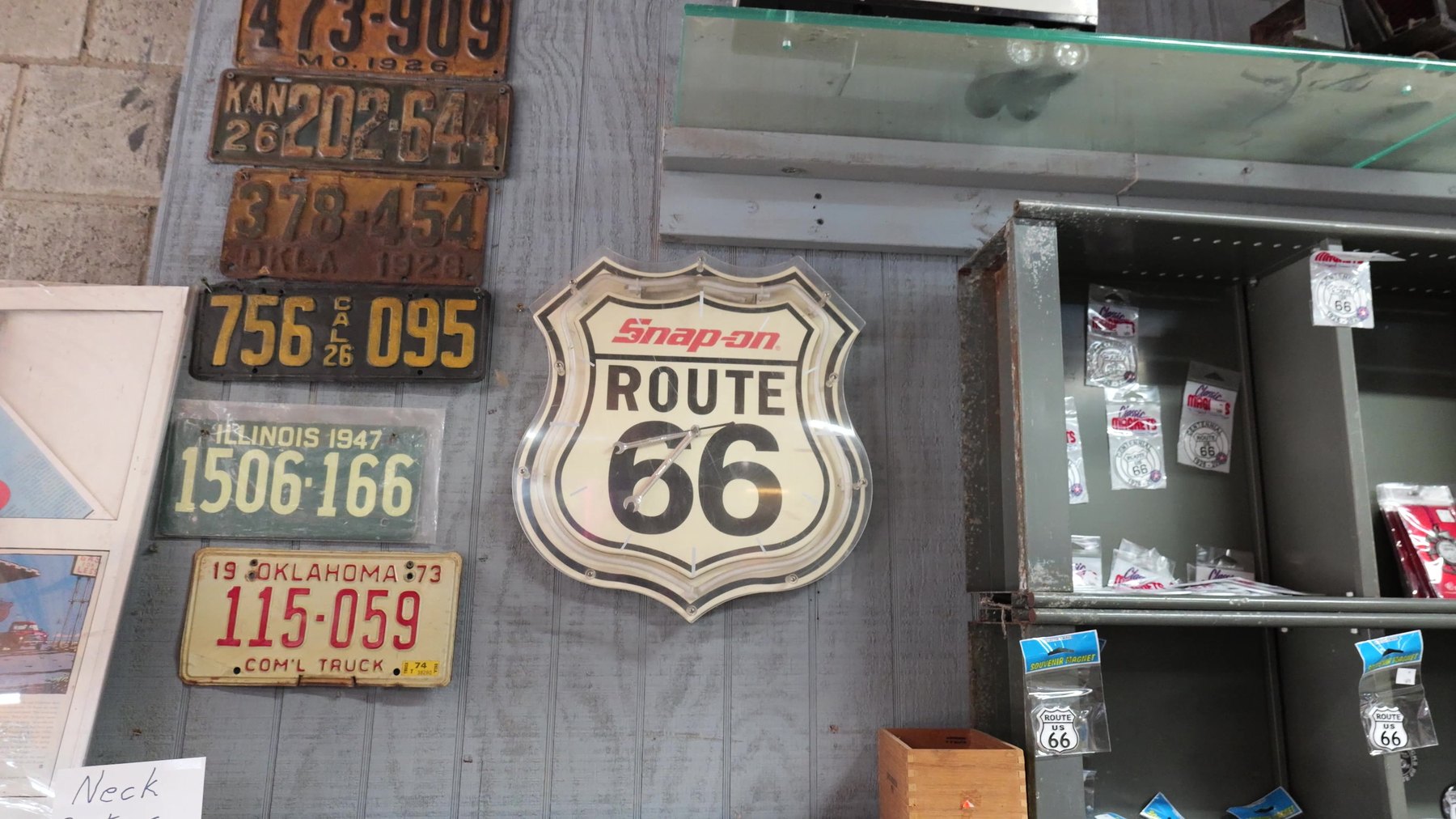
Restoration work reopened several of the station's original service bays, helping return the front of the building to something closer to its 1920s appearance. The Seaba Station Motorcycle Museum officially opened in 2010.
When I visited, I got a chance to hear some of that history directly before walking through the collection. That's one of the advantages of these smaller Oklahoma museums: sometimes the person telling you the story isn't reading it from a script. They're one of the people responsible for preserving it.
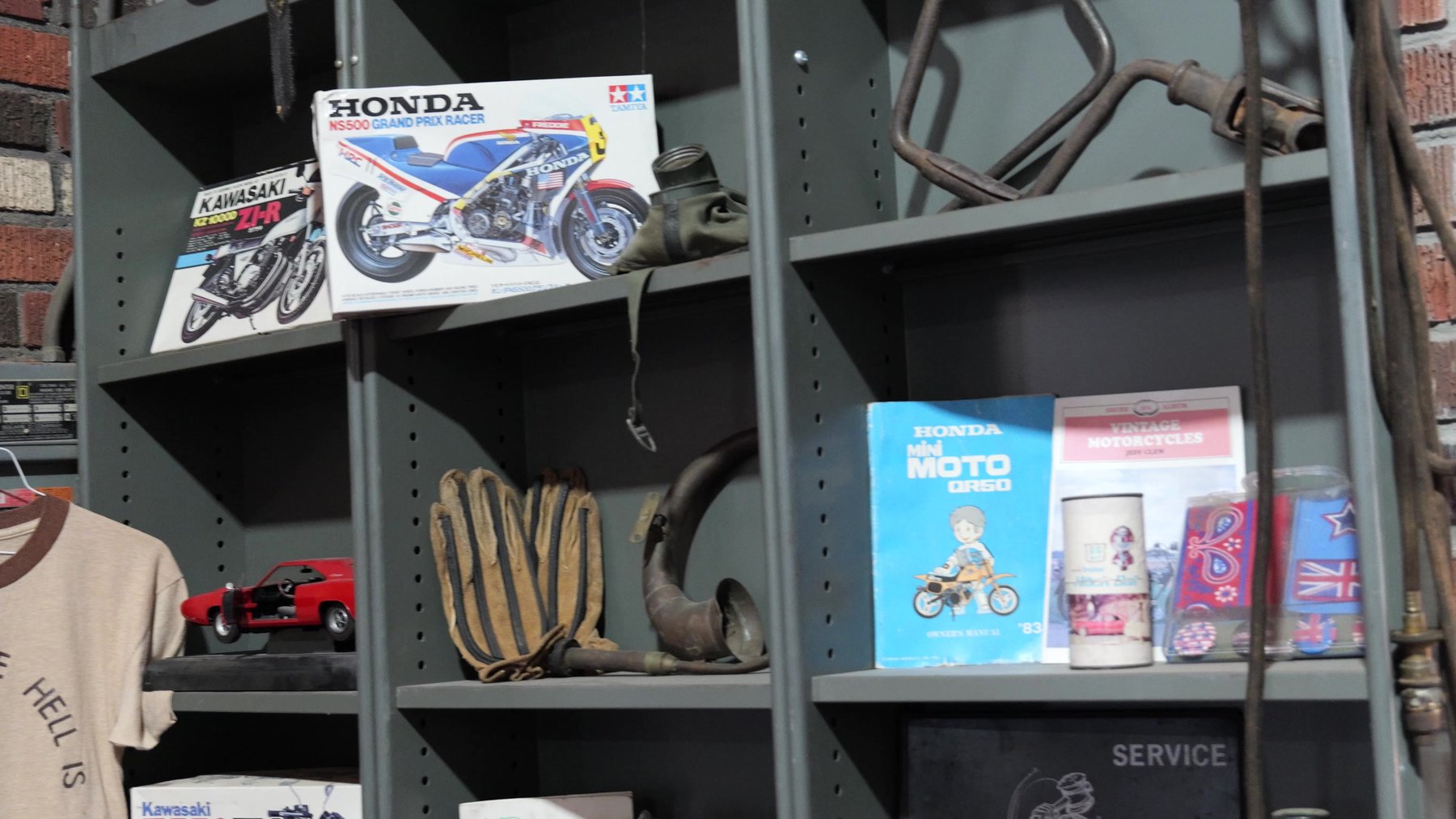
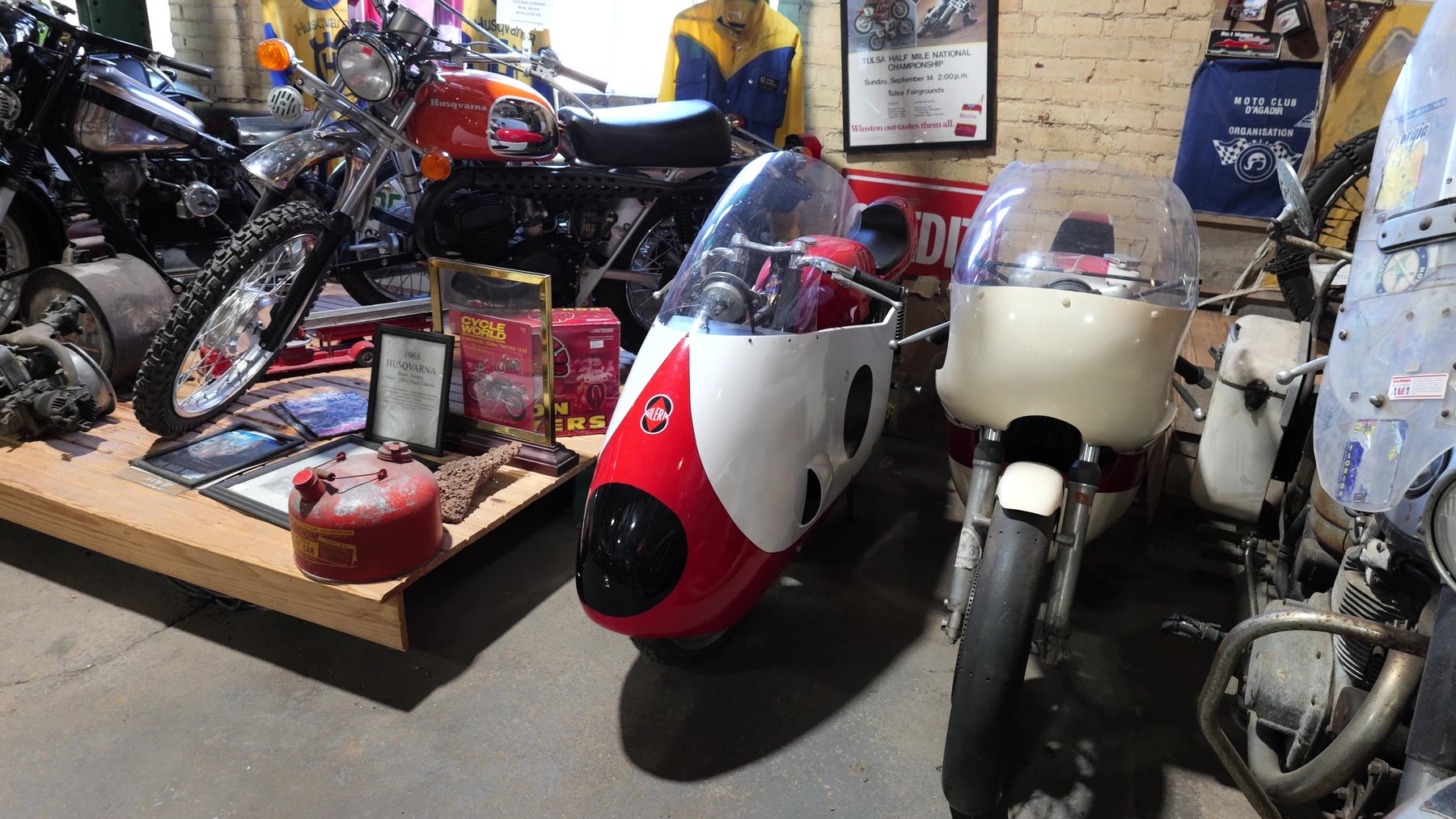
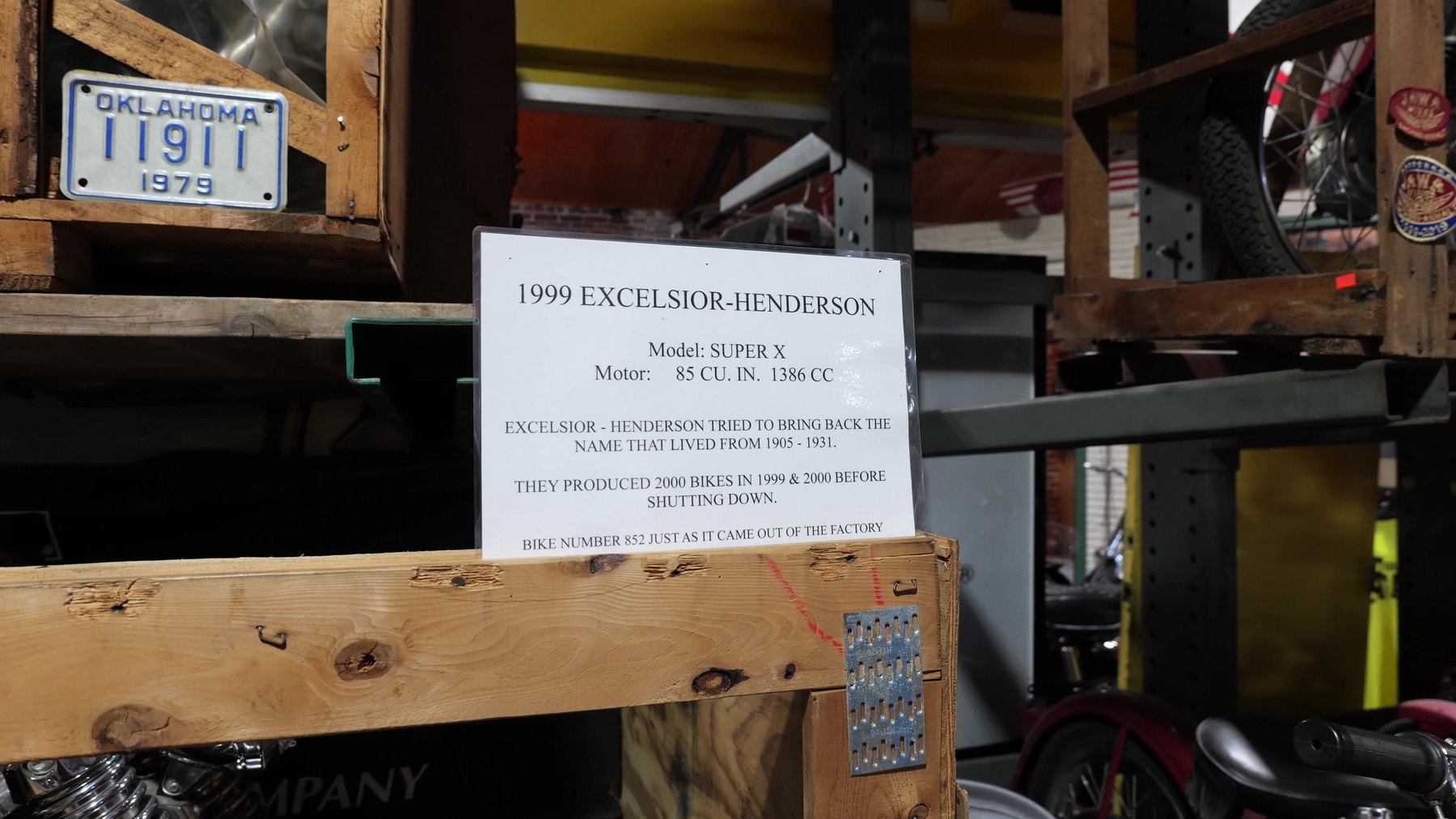
Today, the collection includes well over 100 motorcycles and examples representing road bikes, racing, motocross, off-road riding and other parts of motorcycle history. Some date to the earliest years of the 20th century. Particularly unusual pieces include a 1972 Jawa Golden Sport and a 1979 Triumph that remain in their original dealer delivery crates.
Those are incredibly cool.
But I came across one motorcycle that immediately stopped me.
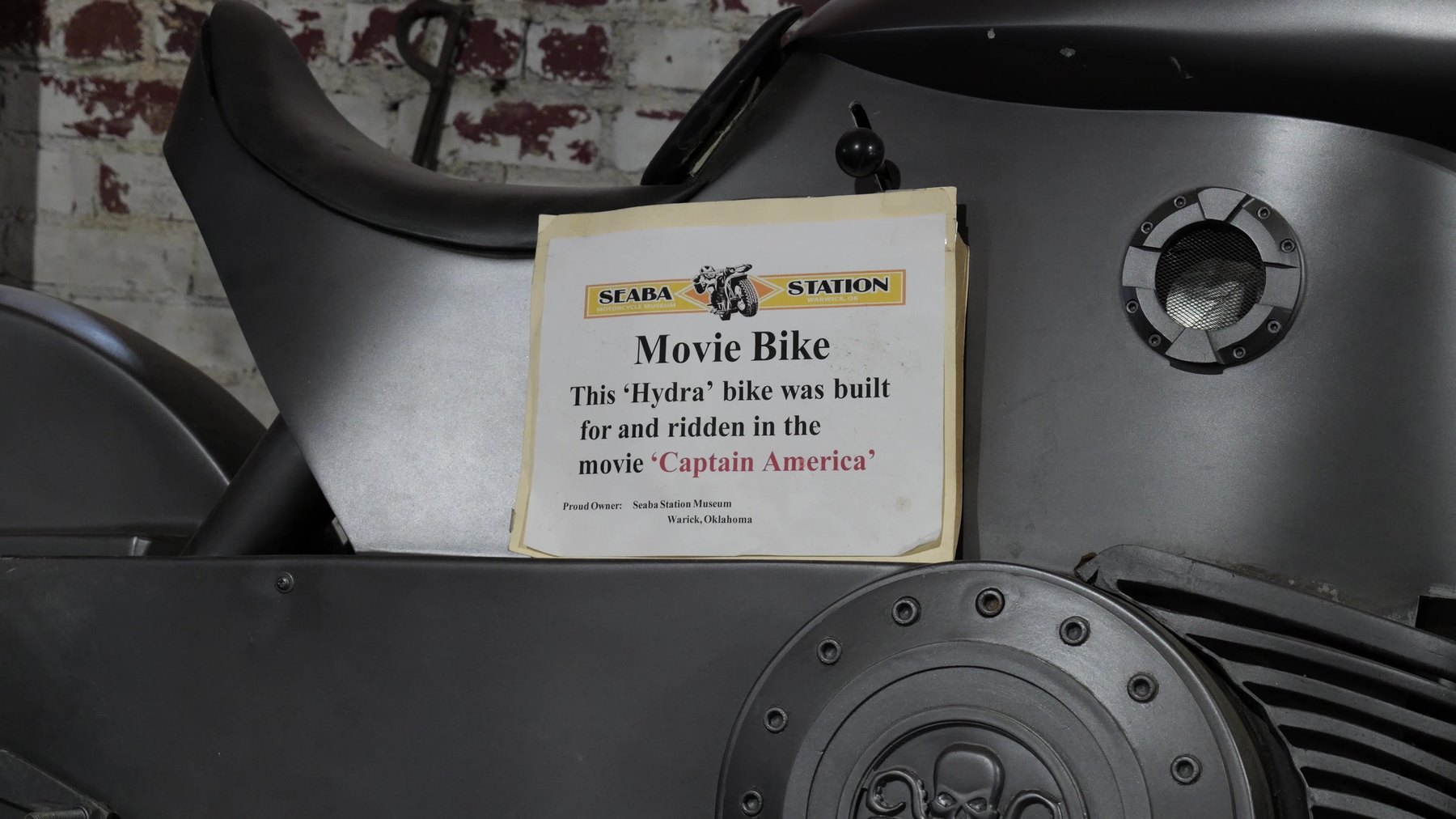
There Is an Actual HYDRA Motorcycle From Captain America Here
Sitting inside this little Route 66 museum in Warwick is a custom HYDRA motorcycle from the 2011 Marvel Studios film *Captain America: The First Avenger*. Museum sources specifically identify it as a custom-built bike featured in the movie, making it considerably more than somebody's later replica.
And there's an important distinction here: this isn't Captain America's personal motorcycle. It's one of the futuristic HYDRA bikes associated with the enemy forces in the movie.
If you've seen *The First Avenger*, you'll remember the large motorcycle chase as Steve Rogers heads toward HYDRA's base. Captain America takes on a group of HYDRA riders equipped with heavily stylized motorcycles, flamethrowers and HYDRA weaponry before eventually using his own bike to help blast his way into the base.
The sequence was a surprisingly complicated combination of real motorcycles, stunt riders, green-screen photography and visual effects. Fuel VFX, which worked on the movie, later explained that it created digital versions of both the HYDRA motorcycles and Captain America's bike to supplement the physical vehicles filmed on set. The sequence also involved CG fire, explosions, digital riders, environmental extensions and HYDRA's blue energy weapons.
That makes seeing one of the physical motorcycles particularly interesting. You're looking at an object that existed on the practical side of a sequence that eventually blended real stunt work with a tremendous amount of digital filmmaking.
For someone interested in movies, that completely changes what this museum is.
It isn't only motorcycle history anymore. It's production history.
Captain America's Other Motorcycle Has Real World War II Roots
The Marvel connection also fits surprisingly well with the rest of the museum because motorcycles are such a visible part of Captain America's World War II origin story.
In *The First Avenger*, Steve Rogers rides a military-style Harley-Davidson WLA. Harley-Davidson worked with Marvel on the film and described the WLA as Captain America's World War II motorcycle. In reality, Harley-Davidson produced roughly 90,000 WLAs for the Allied war effort, and American service members nicknamed the model the "Liberator."
Director Joe Johnston later explained that the production used a modern Harley modified to look like a 1940s motorcycle, allowing the filmmakers to maintain the period appearance while creating something more practical for the production and adding Captain America's Howard Stark gadgets.
So even beyond the HYDRA bike, there's an interesting bridge between the motorcycles displayed at Seaba Station and the visual world Marvel was recreating for the film.
More Than a Marvel Stop
I could easily recommend Seaba Station based entirely on the Captain America connection, especially to somebody who follows Marvel or enjoys movie props and production history.
But that would undersell the museum.
The motorcycles cover an enormous stretch of history, and the building surrounding them tells its own story about the rise of automobile travel in Oklahoma. This is a filling station constructed before Route 66, transformed into a successful repair shop, adapted to wartime work, survived the decline of the original highway and eventually found another life preserving motorcycles for people traveling the same road a century later.
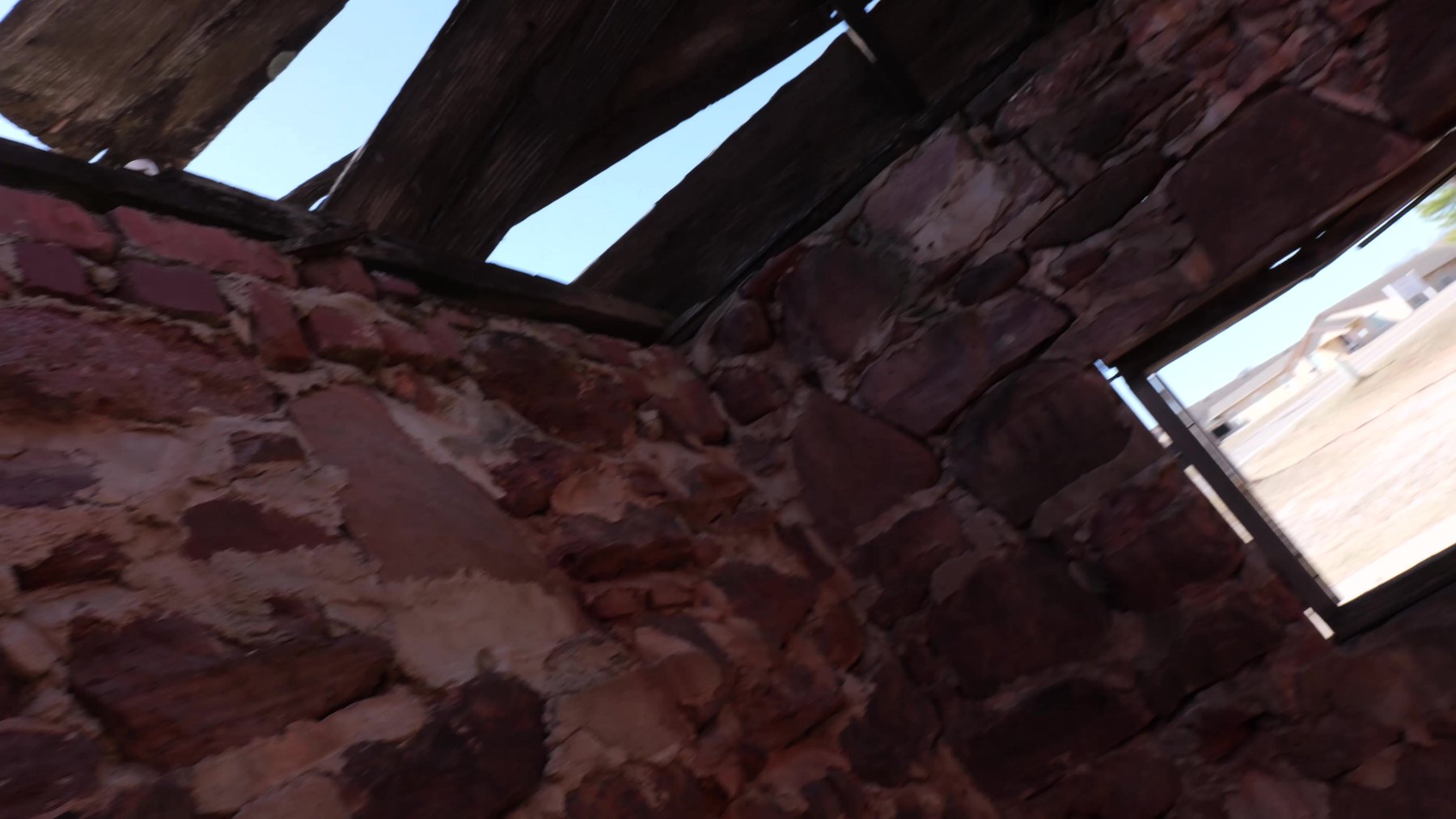
Even the property behind the museum contains something unusual. The original 1921 rock outhouse survives, complete with an early plumbing system and separate cast-iron toilets. The National Park Service describes it as an unusually sophisticated roadside restroom for its time.
That's Route 66 in a nutshell. You pull over because you heard there are some old motorcycles, and suddenly you're learning about pre-Route 66 highways, Model T repairs, World War II military trucks, vintage toilets and Marvel superheroes.
A Perfect Route 66 Surprise
Seaba Station sits about eight miles west of Chandler along historic Route 66 near Warwick. The building is listed on the National Register of Historic Places, and the museum has become one of those stops that makes taking the old highway instead of the turnpike worthwhile.
And with Route 66 celebrating its centennial in 2026, there probably isn't a better time to seek places like this out.
What makes Seaba Station particularly fun is the collision of different kinds of history. The building dates to 1921. The motorcycles span generations. The road outside became Route 66 in 1926. And sitting among all of it is a machine created for a 21st-century Marvel movie set during World War II.
I went in expecting a cool motorcycle museum.
I definitely wasn't expecting to find HYDRA hiding on Route 66.
Public details:
- Name: Seaba Station Motorcycle Museum
- Location: 336992 East OK-66, Warwick, OK 74881
- Phone: 405-258-9141
- Historic status: National Register of Historic Places
- Original building: Seaba Station / Seaba's Filling Station, constructed in 1921
- Museum opened: 2010, according to the National Park Service history
- Notable exhibit: Custom HYDRA motorcycle built for and featured in Captain America: The First Avenger
- Official site: http://seabastation.com/
- NPS listing: https://www.nps.gov/places/seaba-station.htm